

A larger broker network doesn’t automatically create a stronger launch. A considered developer sales channel strategy teams can put into practice starts with the project’s positioning and buyer segments, then assigns each channel a clear role. Direct sales, broker partners and marketing activity need to work together, with defined ownership of enquiries and consistent reporting.
Broad exposure matters, but attention needs to become qualified enquiries and transactions without fragmenting the launch or weakening control. This guide explains how to build a structured channel mix around commercial objectives, establish practical processes for broker engagement and lead management, and measure performance as market feedback develops.
We’ll examine how market intelligence can inform channel selection, how clear governance supports productive broker relationships, and which reporting principles help teams assess progress. Golden Bricks Real Estate brings project curation, market intelligence and broker-community engagement to launch distribution. These capabilities support a more deliberate framework for coordinating reach, accountability and execution.
Key Takeaways
- Shape channel choices around the development’s commercial objectives and buyer segments, rather than maximising partner numbers.
- A practical developer sales channel strategy dubai developers can apply compares audience access, sales-cycle fit, control and reporting needs.
- Document lead registration, qualification, routing and follow-up so direct teams and broker partners understand their responsibilities.
- Use qualified enquiries, response times, stage progression and completed transactions to assess performance and guide adjustments.
- Connect project positioning and market intelligence with broker-community engagement to support coordinated launch distribution.
Why developer sales channel strategy shapes a property launch
A property launch needs more than visibility. It needs a coherent route from first interest to a qualified conversation, a viewing and, ultimately, a transaction. A developer sales channel strategy dubai stakeholders can use effectively coordinates those routes, including the roles, handovers and measures that keep them aligned.
A long list of brokers or marketing platforms may extend reach, but volume alone doesn’t show whether the right buyers are being engaged or enquiries are handled consistently. Channel fit, accountability and buyer experience are stronger foundations. Each route should reflect the project’s positioning, target segments and sales journey. The wider business environment also shows how connected commercial systems can shape development priorities. DP World’s role across logistics and development offers one example of an enterprise operating across interconnected sectors.
What a developer sales channel strategy should decide
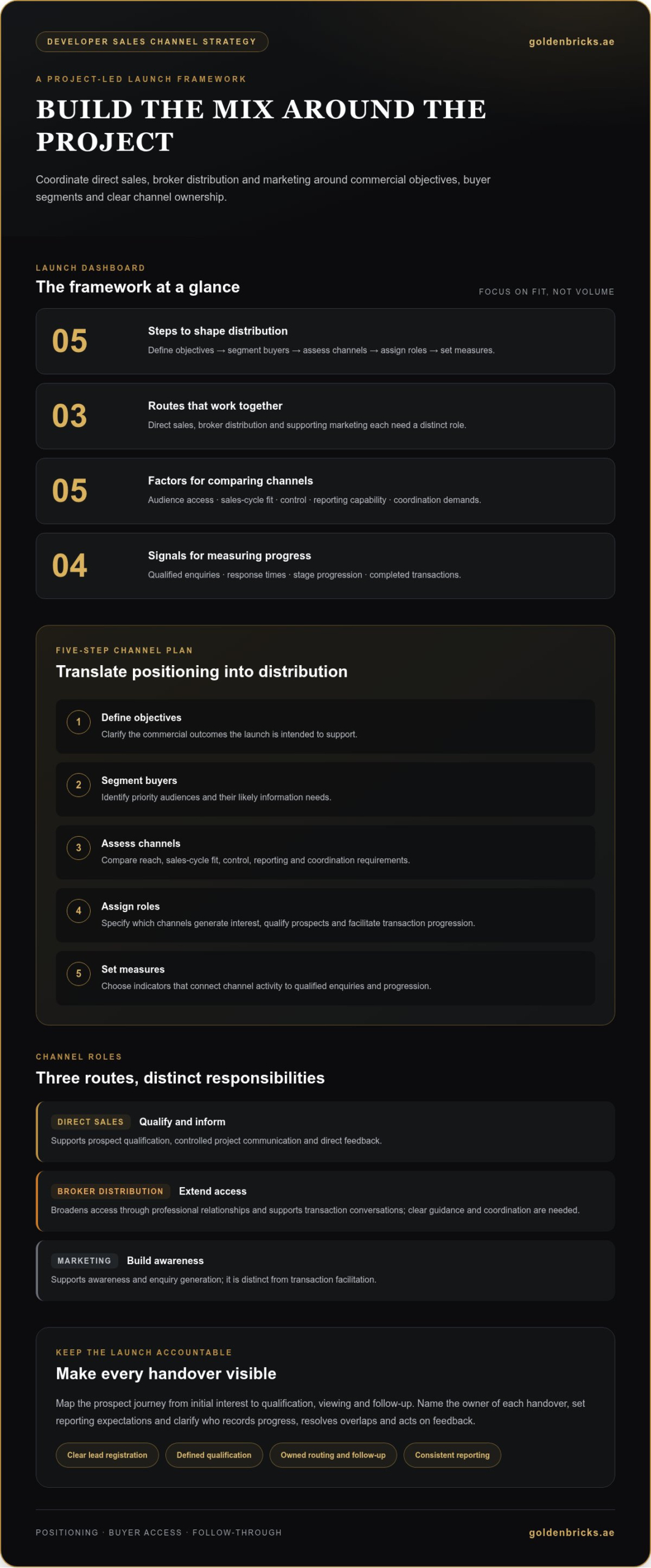
Before launch, determine what direct sales, broker distribution and supporting marketing each contribute. Map how a prospect moves from initial interest to qualification, viewing and follow-up, and name the owner of each handover. Set reporting expectations and decision rights at the same time, so teams know who records progress, resolves overlaps and acts on feedback.
Why channel alignment matters from launch onward
Buyers may encounter a project through different routes, but its core positioning and information should remain consistent. If partners communicate different priorities or prospects receive repeated, disconnected follow-ups, confidence can weaken. Unclear lead ownership also makes it harder to track an enquiry and assess which channels are contributing to its progression.
Channel strategy is the governed system that connects project positioning, buyer access and follow-through, not simply a list of available sales channels.
The appropriate mix depends on the development’s commercial objectives and buyer segments. A project aimed at a defined investor profile may call for a different balance of direct engagement and broker distribution than one designed for a broader range of end users. Consider how each segment prefers to receive information, what support prospects need to advance, and how the team can maintain oversight.
For launches across the UAE, project-specific judgement is more useful than a universal formula. Market intelligence can inform positioning and audience assumptions, while structured real estate broker community engagement can help align distribution around the project’s communication priorities. Keep the mix clear enough to manage and flexible enough to respond as qualified enquiries reveal what resonates. The next step is to translate those objectives into a channel plan.
How to design a developer sales channel mix around the project
A considered channel mix follows the development’s commercial objectives, positioning and buyer profile. The right balance for a project with a clearly defined investor audience may differ from one designed for a broader end-user market. For a developer sales channel strategy dubai teams can govern effectively, assess each route for audience access, sales-cycle fit, control, reporting capability and coordination demands, rather than applying a universal ranking.
Match channel roles to buyer segments and project positioning
Begin with the buyer’s decision journey. Digital demand generation can build awareness and capture initial interest; direct sales can qualify prospects and provide consistent project information; broker networks can extend access and support transaction conversations. These routes can complement one another, but their responsibilities should be distinct. Where a purchase involves more complex considerations, prospects may need sustained, informed support.
Use this five-step sequence to translate positioning into distribution:
- Define objectives: Clarify the commercial outcomes the launch is intended to support.
- Segment buyers: Identify the priority audiences and their likely information needs.
- Assess channels: Compare reach, sales-cycle fit, control, reporting and coordination requirements.
- Assign roles: Specify which channels generate interest, qualify prospects and facilitate transaction progression.
- Set measures: Choose indicators that connect channel activity to qualified enquiries and progression.
Compare direct sales, broker distribution and marketing channels
| Channel | Role and strengths | Trade-offs | Useful measures |
|---|---|---|---|
| Direct sales | Qualifies prospects; supports controlled communication and direct feedback. | Requires defined capacity and consistent follow-up. | Qualified enquiries, response times, stage progression. |
| Broker distribution | Extends access through broker relationships and supports buyer conversations. | Needs aligned project information, coordination and reporting. | Registered leads, progression by stage, completed transactions. |
| Marketing channels | Builds awareness and generates initial interest. | Enquiry volume alone does not establish buyer qualification or transaction contribution. | Enquiry quality, source attribution, progression to qualification. |
Use market intelligence to test audience assumptions against the project’s positioning, then refine channel priorities around the findings. Structured project curation and market intelligence from Golden Bricks Real Estate can inform this planning, while broker-community engagement supports aligned distribution. The result is a tailored framework with clear responsibilities and measures, ready to adapt as launch feedback emerges.
How to prevent channel conflict and maintain lead accountability
Adding broker partners without clear governance can increase operational complexity rather than sales clarity. Duplicate enquiries, inconsistent project information and uncertain ownership make follow-up harder to coordinate and channel performance harder to assess. In a developer sales channel strategy dubai teams can manage with confidence, operating rules are established before launch activity begins and applied consistently across direct sales, brokers and supporting teams.
Set clear broker and direct-sales operating rules
Document how partners are onboarded, what project materials they can access, which communication routes they should use and where their responsibilities begin and end. Direct-sales teams need the same guidance, especially when enquiries arrive through more than one route. Set a transparent process for checking duplicate records, deciding ownership and reassigning a lead when circumstances warrant it. Define who reviews partner activity and how operational issues are escalated and resolved.
Consistency also depends on a shared source of approved project information. Provide a controlled set of current materials and explain how updates are communicated, so prospects receive aligned descriptions of the project, its positioning and the next steps in the sales journey. Clear permissions protect the integrity of that information while giving partners what they need for informed conversations.
Create a reliable lead-tracking and attribution process
Use agreed lead stages with practical definitions for an enquiry, a qualified prospect, a viewing and further progression. Record the source, registration time, owner, handoffs, follow-up activity and outcome in a shared reporting structure. Give stakeholders access appropriate to their roles, while retaining visibility over overall activity and records that need attention.
- Registration: Capture the source and essential enquiry details in a consistent format.
- Qualification and routing: Apply agreed criteria, assign an owner and record the handoff.
- Follow-up: Log relevant activity and update the lead stage as the conversation progresses.
- Escalation: Set out how teams resolve duplicates, stalled follow-up or disputed ownership.
- Review: Use a recurring reporting cadence to examine lead status, activity and outcomes with authorised stakeholders.
Attribution is only as reliable as the shared definitions and disciplined data entry behind it. Without both, the same enquiry may be classified differently across teams, obscuring its path from first contact to transaction. A consistent process supports fairer assessment of channel contribution and more informed decisions about where coordination needs attention.
These protocols should support productive broker relationships, not add unnecessary administration. A clear framework lets partners and direct teams focus on the prospect’s next step while giving launch leadership a coherent view of distribution activity.
How to launch, measure and refine the sales channel strategy
A channel plan becomes useful when translated into clear responsibilities, decision points and review practices. For a developer sales channel strategy dubai teams can adapt to projects across the UAE, implementation should move through four stages: preparation, controlled launch, active management and review. Each stage should provide evidence for the next, rather than treating launch as a single campaign moment.
Build a launch plan with owners and decision points
During preparation, assign accountable owners for project information, broker enablement, lead routing and reporting. Confirm that direct teams and partners are working from consistent materials, understand how enquiries are handled and know where to raise operational issues. Set an activation schedule so each channel receives the information and support it needs before going live.
A controlled launch gives the team an opportunity to test handoffs and reporting before activity expands. During active management, review the agreed indicators and address breakdowns promptly. At scheduled review points, assess market feedback, clarify decision rights and decide whether messaging, partner support or channel roles need adjustment.
Use performance signals to improve channel allocation
Enquiry volume alone offers an incomplete view. Review lead quality and progression alongside response times, qualification outcomes, movement between stages and completed transactions. If a channel generates interest but few prospects qualify, examine audience fit or messaging. If qualified leads stall after handoff, investigate routing, follow-up or the support available to that channel before changing the mix.
Compare results with the project’s commercial objectives and the reliability of its underlying data. Avoid unsupported industry averages: a useful benchmark is one set for the project, its buyer segments and sales journey. A simple scorecard can make review discussions more disciplined:
| Signal | Review question | Project-specific reference |
|---|---|---|
| Qualified enquiries | Are channels reaching the intended buyer segments? | Set a target aligned with launch objectives. |
| Response time | Are enquiries receiving timely, recorded follow-up? | Agree an internal service expectation. |
| Stage progression | Where do prospects pause or disengage? | Compare movement across defined lead stages. |
| Completed transactions | Which routes contribute to the intended commercial outcomes? | Review outcomes alongside source and lead quality. |
Any thresholds should be project-specific and interpreted in context. Check data completeness before drawing conclusions, then use repeated patterns, not isolated results, to refine channel allocation and partner support. Market intelligence can help frame those reviews and connect feedback to positioning. Discuss launch channel planning with Golden Bricks to bring project positioning, broker engagement and performance review into a coordinated go-to-market approach.
How Golden Bricks supports developer sales channel strategy
A sound launch plan starts with a clear view of the project and the market it is entering. Golden Bricks brings project curation and market intelligence into channel planning, connecting a development’s positioning with its intended buyer segments and distribution priorities. This gives developers a considered basis for deciding how direct sales, broker engagement and supporting marketing can work together.
From market intelligence to a project-specific go-to-market plan
Market understanding informs more than audience selection. It can help shape the project narrative, identify questions buyers may need answered and guide which channels are suited to reaching and supporting those prospects. Golden Bricks aligns these considerations with partner engagement and sales processes, so project communication remains coherent across the buyer journey. Recommendations are tailored to the development rather than drawn from a fixed channel formula.
For developers considering a developer sales channel strategy dubai teams can adapt across the UAE, this project-specific approach connects positioning, channel roles and lead processes. Market feedback can then inform refinements as the launch progresses, without assuming a particular sales velocity, return or campaign outcome.
A structured advisory relationship for developers
Golden Bricks’ relevant capabilities include project curation, market intelligence, broker-community engagement and sales channel structuring. Together, these support a disciplined approach to launch distribution: clarify the project’s market position, align broker communication and establish a sales framework suited to its objectives. The emphasis is on informed recommendations and professional relationships, not on adding partners without a defined role.
Golden Bricks is an independent real estate brokerage and consultancy with more than 25 years of global industry experience. Its market intelligence and broker-community capabilities inform its advisory perspective on development launches.
For developers preparing a launch or reviewing existing distribution, a focused discussion can help clarify project positioning, buyer priorities and sales-channel requirements. Discuss a developer go-to-market strategy with Golden Bricks.
Build your next launch on a more deliberate channel plan
A disciplined sales strategy connects the development’s positioning with the buyers it is intended to reach. The channel mix should reflect those commercial objectives, while clear ownership and consistent lead processes help direct teams and broker partners work in concert. Regular measurement then shows where enquiries progress, where handoffs need attention and when the plan should be refined.
For developers shaping a developer sales channel strategy dubai buyers and partners can engage with confidently, project-specific judgement matters more than channel volume alone. Golden Bricks brings project curation, market intelligence, broker-community engagement and sales channel structuring to launch planning.
Set the foundations for a launch with clear positioning, aligned distribution and measurable decision points. Discuss a developer go-to-market strategy with Golden Bricks and take the next step toward a more coordinated launch plan.
Frequently Asked Questions
What is a developer sales channel strategy?
A developer sales channel strategy is the plan for reaching, qualifying and serving prospective buyers through coordinated sales routes. A developer sales channel strategy dubai teams can apply defines the role of each channel, its target audience, how leads are handed off, and how activity is reported and measured. It goes beyond listing brokers or marketing platforms by establishing shared operating rules that support consistent project positioning and a coherent buyer experience.
Which sales channels can a property developer use?
A property developer can combine an in-house sales team, external broker partners and marketing channels that generate or nurture enquiries. The right mix depends on the project’s positioning, buyer segments, sales-cycle requirements and the developer’s operating capacity. Give each route a distinct role, such as building awareness, qualifying interest or facilitating a transaction. Document handoffs and use shared reporting definitions so teams can assess lead quality and progression consistently.
How should developers choose between direct sales and broker distribution?
Developers should compare direct sales and broker distribution by audience fit, advisory requirements, control, coordination effort and data visibility. Direct teams can maintain close control over project communication and prospect follow-up, while brokers can extend access through professional relationships. The choice needn’t be all or nothing. Assign complementary responsibilities, clarify handoffs and use consistent information so prospects experience a joined-up journey rather than duplicate outreach.
How can developers prevent channel conflict?
Developers can prevent channel conflict by documenting lead registration, ownership, routing and duplicate-enquiry procedures before launch. Set out partner access, follow-up expectations, approved project information and escalation routes in writing. Apply shared lead stages and attribution rules across direct sales and broker partners. Regular reviews help surface disputes or process gaps early, allowing the team to resolve them using recorded activity and agreed procedures rather than informal assumptions.
What should developers measure across sales channels?
Useful measures include qualified enquiries, response times, progression between sales stages, viewing or consultation activity, and completed transactions. Review these alongside lead quality and source attribution, rather than relying on enquiry volume alone. Define each measure before launch and apply it consistently across channels. Comparisons are most meaningful when reporting periods, qualification criteria and project conditions are sufficiently similar; otherwise, apparent differences may reflect inconsistent data rather than channel performance.
When should a developer revise its sales channel strategy?
Review the strategy at planned launch milestones and when reliable data points to a persistent issue, such as weak lead qualification, slow follow-up or unclear partner handoffs. Diagnose the cause before changing the channel mix: it may lie in channel selection, messaging, process or data quality. Make deliberate adjustments, document the rationale and monitor subsequent results. This helps distinguish a sustained pattern from an isolated result and supports measured decisions.
How can a real estate advisory partner support a developer sales strategy?
A real estate advisory partner can contribute market intelligence, project positioning, broker-community engagement and go-to-market planning. Recommendations should connect the development’s commercial objectives with defined channel roles, lead processes and reporting expectations. Golden Bricks brings project curation and market intelligence capabilities to this work, alongside broker-community engagement and sales channel structuring. These inputs can help developers shape a distribution plan around the project’s market context and launch requirements.