

An attractive property is not proof of a sound transaction. To understand how to perform due diligence on a UAE property, verify the title and seller’s authority, assess the property’s condition and liabilities, and review any tenancy or lease documents before committing. In Dubai, real property registration is governed by Dubai Law No. 7 of 2006, according to the Dubai Legislation Portal. A lawyer is particularly valuable when ownership, a power of attorney, a mortgage or contract terms require legal scrutiny.
It’s reasonable to ask whether you need a lawyer to buy property in Dubai. Legal advice can help identify risks in documents and transaction terms, while registry checks and a physical inspection cover other essential parts of due diligence. The level of review you need depends on the transaction’s complexity.
This guide explains which checks you can carry out yourself and when legal support may strengthen your review. It covers seller identity, powers of attorney and rental properties, as well as records and property conditions that can affect ownership, intended use and rental appeal. Use it to assess the risks before deciding how to proceed.
Key Takeaways
- Separate checks you can handle yourself from contract, title or authority issues that warrant legal review.
- Assess more than the seller’s identity: property liabilities, condition and transfer documents can materially affect the transaction.
- For a representative signing or transferring on the seller’s behalf, examine the power of attorney’s validity and scope.
- Rental due diligence should consider tenancy records, the property’s condition and shared areas that can influence its appeal to occupants.
Can I do the due diligence myself to save money?
You can collect routine documents and inspect a property yourself. Knowing how to perform due diligence on a UAE property also means recognising when a legal review is important.
Identifying Purchase Risks
Reviewing Fees and Timelines
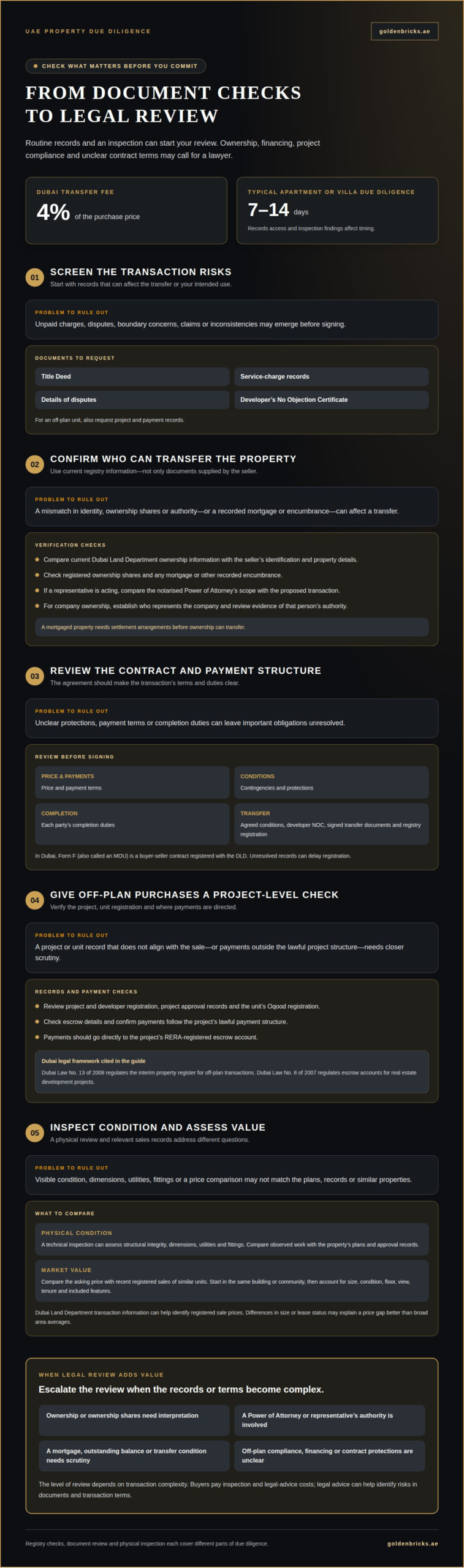
Dubai’s property transfer fee is 4% of the purchase price. Standard apartment or villa due diligence typically takes 7 to 14 days; records access and inspection findings affect timing. Buyers pay inspection and legal-advice costs. To complete the transaction, satisfy agreed conditions, obtain the developer NOC, sign transfer documents and register ownership through the relevant land registry. Unresolved records can delay registration.
Examining Sale Agreements
Review the Sale and Purchase Agreement for the price, payment terms, contingencies and each party’s completion duties. In Dubai, Form F, also called an MOU, is a buyer-seller contract registered with the DLD. For an off-plan purchase, review the project and developer registration, Oqood and escrow details. Confirm that payments follow the project’s lawful structure and are directed to its RERA-registered escrow account. A lawyer can assess unclear protections before you sign. This is how to perform due diligence on a UAE property at the contract stage.
Assessing Market Value
Assess value by comparing the asking price with recent registered sales of similar units. Start with properties in the same building or community, then account for size, condition, floor, view, tenure and included features. Dubai Land Department transaction information can help you identify registered sale prices. Compare several genuinely similar sales: differences in size or lease status may explain a price gap better than broad area averages.
Do I need a lawyer for a Dubai property purchase?
A lawyer is most useful when ownership, financing, project compliance or contract terms involve legal complexity. You can begin with registry and document checks, but mortgages, multiple owners and off-plan structures may need closer review, where firms like MBM Law Firm provide strategic legal counsel to protect buyer interests.
For a resale, obtain current Dubai Land Department information rather than relying only on the seller’s copy. A DLD title search can show ownership details and legal encumbrances. Compare the registered owners and ownership shares with the seller’s identity, then investigate any mortgage, outstanding balance or transfer condition. A mortgaged property needs settlement arrangements before ownership can transfer. In another emirate, verify title through the relevant land registry.
Foreign ownership depends on the emirate and designated area. Non-GCC nationals may purchase in designated freehold areas in the UAE. In Dubai, confirm whether the property is freehold, leasehold or usufruct, as each tenure carries different rights and obligations. A lawyer can interpret the title and explain any restrictions that affect your intended use.
Off-plan transactions need project-level scrutiny. Dubai Law No. 13 of 2008 regulates the interim property register for off-plan transactions in Dubai, according to the Dubai Legislation Portal. Dubai Law No. 8 of 2007 regulates escrow accounts for real estate development projects in Dubai, according to the Dubai Legislation Portal. Check the developer and project’s RERA registration, the unit’s Oqood registration, project approval records and the escrow account. Payments should follow the project’s lawful payment structure and go directly to its RERA-registered escrow account.
For commercial property, review lease records, service charges and the developer-issued No Objection Certificate. A technical inspection can assess structural integrity, dimensions, utilities and fittings; compare observed work with the property’s plans and approval records. A lawyer can identify where ownership, permits or contract provisions merit deeper analysis. For buyers considering an off-plan opportunity, curated off-plan projects provide a relevant starting point for project review.
Verifying seller identity and power of attorney
Confirm that the person offering the property is legally authorised to act for its registered owner. In Dubai, compare current ownership information with the seller’s identity and, if applicable, the representative’s authority.
Verifying Seller Identity
Verify the seller’s identity by matching their identification details against the current property ownership record. This can reveal mismatches before you sign or transfer ownership. Obtain current Dubai Land Department information instead of relying only on a copy supplied by the seller. Compare the registered owner’s name with the identity document and property details. If a company owns the property, establish who is representing it and review evidence of that person’s authority.
Checking Title and Seller Authority
Researching the Seller
Check that the transaction details align with ownership records and known property obligations. Request supporting documents for outstanding service charges, mortgage settlement and any required No Objection Certificate. Compare the property’s identifying details across the records. Matching details help distinguish an administrative inconsistency from a material ownership concern. If the seller is represented by an agency, review its written authority to act in the sale.
Due diligence for rental properties
A rental property calls for two assessments: the condition of the asset and the income arrangement attached to it. Regulations vary by emirate, so establish the property’s location before reviewing the applicable records and tenancy documents. In Dubai, the Dubai Land Department is relevant to property records, while an existing commercial lease should be checked for Ejari registration.
Start with the tenancy agreement. Confirm the named parties, property details, rent, payment schedule, lease period, renewal terms and stated maintenance responsibilities. Compare these details with payment records and the seller’s account of the tenancy. For a tenanted commercial property in Dubai, check whether the existing lease agreements are registered with Ejari. Gaps between the agreement and payment history can affect income expectations and handover planning.
Inspect both the unit and the building, not just the interior. A licensed technical inspection company can assess structural integrity, dimensions, utilities and fittings. Record visible defects, signs of previous repairs and any differences between the actual layout and the documents provided. Check common areas too, as their upkeep can influence appeal to tenants and future buyers. A well-presented unit may still need maintenance beyond its front door.
Before you buy, link each finding to a decision: resolve a document discrepancy, clarify an existing obligation or factor a repair into your assessment. For example, clarify a lease with unclear maintenance responsibilities before relying on projected rental income. Keep inspection findings, lease records and payment evidence together so your assessment reflects both the asset and its occupancy arrangements. For investors seeking additional income security, rental guarantee services from platforms like takeem.ai can help safeguard returns across the UAE.
For ongoing oversight after acquisition, consider property management support to help maintain a clear view of tenancy administration and property condition.
Golden Bricks Real Estate: Property Management
Golden Bricks Real Estate provides Property Management for owners moving from purchase due diligence to ongoing property oversight. After assessing title, seller authority and tenancy documents, owners can use management support to maintain continuity beyond the transaction. It is a relevant next step for investors who want to manage a property as a long-term asset, not simply complete a purchase.
For buyers still assessing opportunities, Golden Bricks Real Estate also offers Exclusive Ready Properties, Exclusive Off-Plan Projects and Project Curation. These offerings support different stages of an investment decision, from identifying a suitable asset to considering its place in a wider portfolio. The right path depends on whether you are acquiring, holding or evaluating a property opportunity.
Contact Golden Bricks Real Estate to discuss your property requirements and decide on your next step.
Make Your Next Property Decision With Clarity
Your next step is to turn due diligence into a considered investment decision. Knowing how to perform due diligence on a UAE property helps you assess not only whether a transaction is ready to proceed, but also whether the asset fits your long-term objectives. Keep your priorities clear: intended use, ownership horizon, rental strategy and the level of ongoing oversight you want. These factors can help you identify which opportunities merit further attention and what support may be useful after acquisition.
Golden Bricks Real Estate offers Exclusive Off-Plan Projects and Exclusive Ready Properties for different investment stages, as well as Property Management for owners seeking ongoing oversight. Whether you are assessing an acquisition or planning for the period after transfer, align your next step with your property objectives and desired level of involvement.
Contact Golden Bricks Real Estate today to discuss your requirements and move forward with a clear, considered plan.
Frequently Asked Questions
How long does the due diligence process take?
Can I do due diligence remotely from outside the UAE?
Yes. Buyers can access the Dubai REST app and Dubai Land Department website from anywhere in the world, including to review title information. Remote checks cannot establish a property’s physical condition. If you cannot attend, arrange for an inspection on your behalf and consider how transfer formalities will be handled locally. Keep copies of records and inspection findings together for review.
How can I verify the service charges are fair?
Compare the property’s approved rate with similar buildings using the Dubai Land Department Service Charge Index. Then assess the amount against the services and facilities covered, rather than assuming a lower figure offers better value. Ask how charges are calculated and whether service provision or planned maintenance could affect future costs. A sound comparison considers both the rate and what it covers.
Is it risky to buy property in a newly developing area?
A developing area is not automatically a poor investment, but its appeal may depend on how the surroundings evolve. Consider access, completed amenities, nearby construction and the likely tenant profile. Compare the actual setting with your intended use: a home for immediate occupation may present different considerations from an investment held for future rental demand. Assess the property based on present conditions as well as future plans.
What happens if I find a problem during due diligence?
First, record the issue and establish how it affects use, condition, cost or transfer. Depending on the issue, you can seek a remedy from the seller or discuss revised terms. Withdrawal may be possible if the Sale and Purchase Agreement includes a due-diligence clause. Keep communications in writing and do not treat an informal assurance as a change to the signed agreement.
What is RERA’s role in due diligence?
In Dubai, RERA is part of the framework for property oversight and transaction compliance. For an off-plan purchase, its registration records help buyers assess the developer and project, while the associated escrow account is relevant to payment checks. RERA-related checks do not replace title verification through the Dubai Land Department or, in another emirate, the relevant land registry. Each check addresses a different part of the review.