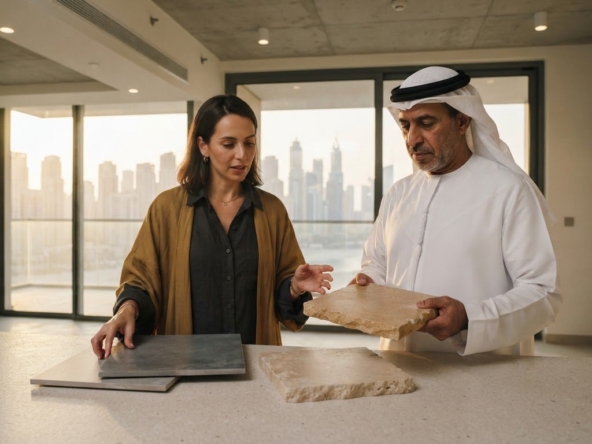

Real estate can be a durable part of building generational wealth with real estate in the Middle East, but it isn’t automatically the best choice for every family. A balanced portfolio should limit exposure to any one market to 30-40% and diversify across asset classes and locations.
Property can offer both rental income and long-term capital growth potential, while ownership arrangements, borrowing and cash reserves affect how resilient an investment is across generations. The UAE real estate market presents opportunities, but lasting family wealth takes more than choosing a property: it also requires careful planning and disciplined portfolio management.
This article explains how Dubai property can fit into a broader wealth strategy, what to consider when planning ownership and inheritance, and how global markets, leverage and liquidity reserves shape long-term decisions. It also outlines how regional market trends can inform a measured approach to preserving assets for future generations.
Key Takeaways
- Assess Dubai property as one component of a family wealth plan, weighing income potential, portfolio balance and inheritance arrangements together.
- Compare ownership structures such as trusts and wills with your family’s circumstances, since inheritance rules can vary by nationality and religion.
- Evaluate property across global markets: diversification can reduce concentration risk, while local demand and asset type influence performance.
- Set borrowing limits and maintain cash reserves to help the portfolio withstand expenses and changing market conditions.
- For eligible investors, the Federal Authority for Identity, Citizenship, Customs & Port Security (ICP) sets the UAE Golden Visa real estate investment minimum at AED 2 million.
Q3: Is real estate the best option for wealth building in Dubai?
Local property can generate rental income and may appreciate, but it should have a defined role in a diversified family plan. Building generational wealth with real estate in the Middle East means considering succession, liquidity and management alongside the property itself.
Intergenerational Asset Transfer
Passing property to children or grandchildren involves documenting ownership, intended beneficiaries and the family’s other assets. Within the United Arab Emirates, property distribution without a registered will could follow Sharia law, including for non-Muslims. Families with a local home and overseas investments should include both in succession planning, since nationality and religion can affect inheritance and property rights.
The region has no inheritance tax, and its legal framework supports property transfers to heirs. A registered will can clarify intentions; families should align it with ownership records and their wider estate plan. Open communication can also establish who will manage a property and how income will be shared across generations.
Income Generation and Asset Management
Residential property can generate rental income and may appreciate. Assess each asset by tenant demand, location, upkeep and recurring expenses, rather than relying on projected rent alone. For example, a family comparing two homes should weigh their tenant profiles and operating needs against its income objectives.
Property management can help oversee upkeep and maintain investment value. Review rental performance and market trends regularly, then decide whether to retain, improve or sell an asset. Golden Bricks Real Estate advises investors that while the country has no personal income tax on property investment income, owners still need clear financial records and a plan for ongoing expenses.
Ownership Access and Residency Benefits
Foreign ownership rules vary across different emirates and eligible locations. Establish the permitted ownership arrangement for a specific property before comparing it with other markets or regions. The right to own locally does not automatically establish ownership rights in neighboring countries.
Residency benefits are separate from property returns. According to Federal Authority for Identity, Citizenship, Customs & Port Security (ICP), the UAE Golden Visa real estate investment minimum is AED 2 million. Treat eligibility as one consideration in building generational wealth with real estate in the Middle East, not as a substitute for assessing income, ownership and succession objectives.
Liquidity and Asset Protection
Property is less liquid than cash: selling depends on buyer demand, pricing and timing. Keep accessible reserves separate from real estate so family expenses do not force a rushed sale. In a portfolio review, consider each asset’s likely role, including income, family use and potential resale.
Before purchasing, review the title, ownership terms, payment schedule, service charges and property condition. Establish a process for maintenance, rental records and periodic reviews. Sound ownership documentation and estate planning help preserve assets; putting a property in a family member’s name alone does not create a complete succession plan.
Trusts and property ownership structures
Ownership structures determine who controls property, receives income and carries out a family’s succession plan. In the UAE, trusts, wills and other legal mechanisms can form part of an estate plan, but suitability depends on the family’s assets and cross-border ties.
Match the structure to the family legacy
Start by listing each property, its legal owner, intended beneficiaries and the jurisdictions involved. Then decide how control should pass if an owner dies or becomes unable to manage the asset. A trust can support defined arrangements for management and beneficiaries, while a will can set out the intended distribution of an estate.
Non-Muslims can register a DIFC Will to distribute an estate according to their wishes. In Saudi Arabia, Sharia inheritance laws influence asset distribution and should be considered in estate planning. Families with property in both Dubai and Saudi Arabia should map the distinct rules before choosing structures, rather than assume one document governs every asset.
Protection depends on aligning documents with actual ownership. Record each property’s title, identify the intended decision-makers and keep estate documents consistent with the ownership structure. This gives family members and partners a clearer framework for preserving a legacy across generations.
Choose locations through demand evidence
For Dubai property, assess employment centres, transport access, schools, retail and planned nearby development. Compare these demand drivers with the intended use, whether family occupation, long-term rental income or eventual resale. A location’s prestige alone does not establish durable tenant demand.
Supply conditions also matter. New home deliveries in Dubai’s AED 2,000-3,000 per square foot segment fell by 57% year on year, while supply in the AED 3,000-5,000 per square foot segment fell by 39%. Compare a target building’s competing stock and delivery pipeline with these segment trends before treating scarcity as a lasting advantage.
Balance prime exposure and diversification
Prime and super-prime homes may attract buyers seeking distinctive locations, privacy and high-quality amenities. Their appeal does not remove concentration risk: a family holding several properties in one district remains exposed to the same local demand, supply and resale conditions.
Review assets by location, property type and intended role. For example, a portfolio with one prime Dubai residence and rental properties in different districts has different exposure from one concentrated in a single development. Include assets outside real estate in the family plan, and assess how each holding supports income, liquidity or long-term preservation.
For ongoing oversight of rental assets, property management planning can help keep maintenance, income records and portfolio reviews within a consistent process.
Global real estate markets and capital appreciation
Capital appreciation is an asset’s increase in value over time, but it varies by market and property. When comparing global opportunities, examine local demand, new supply, rental income, resale liquidity and ownership conditions. These factors help distinguish a durable investment case from short-term price momentum and show whether a property supports the family’s long-term vision or ties up capital needed elsewhere.
Dubai’s Emirates Hills provides a striking historical example. A six-bedroom villa there increased in price by 1,635% between its 2015 purchase and its January 2025 sale. That single property illustrates the scale of an individual outcome, not a reliable forecast for other homes or future periods. Investors should examine the asset’s location, condition, holding period and market context before drawing conclusions from a headline sale.
Compare markets using consistent measures, not headline prices alone. Review transaction activity, tenant demand, available supply, rental income and ease of resale. Then consider each property’s expected role in the portfolio: income, capital preservation or potential appreciation. Strong demand may still come with limited liquidity for a particular property type, while a lower-cost asset may involve greater vacancy or management concerns.
Property type also affects performance. The European Union notes that commercial real estate markets tend to be significantly more cyclical than residential real estate. An office or retail asset may therefore respond differently from a family home when business conditions change. When weighing global opportunities, assess tenant concentration, lease terms and local economic drivers alongside the reason for buying.
For each target market, use a consistent review before committing capital:
- Identify the local source of demand, such as employment, transport or household formation.
- Compare existing properties with current and planned competing supply.
- Assess rental income after operating obligations and likely periods without tenants.
- Consider resale conditions and how quickly the asset could be converted into liquidity.
- Map ownership and inheritance arrangements across every relevant jurisdiction.
Cross-border ownership adds another layer. A property transfer may involve different title records, inheritance rules and tax treatment from those applying to the family’s other assets. Keep ownership documents, income records and estate plans aligned in each jurisdiction. Review the portfolio periodically and rebalance if one market or property type dominates the family’s exposure. This connects appreciation potential with preservation and a practical plan for future generations.

Leverage limits and cash reserves
Borrowing can expand a property portfolio, but it also adds repayment obligations during vacancies, repairs and market changes. For multigenerational stability, keep portfolio loan-to-value at or below 60%, and maintain cash reserves equal to at least three months of expenses when using leverage.
Foreign buyers and UAE residents can consider cash purchases or bank mortgage finance. Lender assessment, income documentation, residency status and property characteristics shape access to a mortgage and its terms. Compare repayment commitments with the portfolio’s rental income and available cash.
A 60% portfolio loan-to-value ceiling is a planning discipline, not a target to reach. Calculate total borrowing against the value of all relevant property assets, then test how the portfolio would perform if rental income declined or a major repair arose. A family holding two Dubai properties, for example, should assess debt across both assets rather than reviewing each loan in isolation.
Cash reserves serve a different purpose from borrowing capacity. Keep them accessible for mortgage payments, service charges, maintenance and household needs, without relying on a sale to meet immediate obligations. The three-month reserve guidance applies to expenses when using leverage; emergency savings of 3-6 months of living expenses is also presented as an ideal financial-planning practice.
Build a practical stress test before committing to an off-plan development or ready property:
- List each loan, its repayment schedule and the property securing it.
- Estimate recurring expenses, including maintenance and service charges.
- Test whether available income covers obligations during a vacancy.
- Retain at least three months of expenses in cash reserves when using leverage.
- Review total portfolio loan-to-value and keep it at or below 60%.
For family governance, document who monitors repayments, approves major expenses and replenishes reserves. This reduces uncertainty when ownership passes through inheritance or family responsibilities change. A written process should specify account access, record storage and who is responsible for each review.
Off-plan developments can create timing pressure when payments fall due before rental income begins. Match each scheduled payment to available funds, and do not assume future rent will cover an obligation before the property is ready and occupied. For a completed rental property, compare actual income with recurring costs before taking on additional borrowing.
Review leverage whenever the portfolio changes, including after a purchase, sale, refinancing decision or significant expense. A consistent review of debt, cash and property values helps families preserve flexibility across the region. Strong governance keeps borrowing in service of the family’s long-term plan, rather than letting debt dictate it.
Middle East real estate market trends
Regional investment conditions differ by country, asset type and location. Dubai’s transaction activity and migration trends provide useful context, but they do not replace market-by-market analysis.
Country-Level Investment Rules and Returns
The UAE, Saudi Arabia, Qatar, Bahrain and Oman each have distinct property rules and investment conditions. Compare foreign ownership access, eligible locations, title arrangements, transaction obligations and rental demand before selecting a market. Returns depend on the property, tenant demand, operating costs and resale liquidity, so performance in one country does not establish what to expect in another.
In the UAE, prime residential properties in sought-after Dubai and Abu Dhabi districts have average gross rental yields of 5-8%. Gross yield doesn’t account for expenses or vacancies. Saudi Arabia, Qatar, Bahrain and Oman require separate assessments of each market’s ownership rules and asset-level income potential.
Regional investment structures are also evolving. REIT regulation has been introduced in Saudi Arabia, the UAE and Bahrain, offering another structure to assess alongside direct ownership. Compare governance, underlying properties, income approach and exposure before deciding whether an investment fits your portfolio.
Vacancy, Market-Cycle, Currency, and Regulatory Risks
Vacancies interrupt rental income while fixed property costs continue. Assess tenant demand, competing supply and the property’s appeal to its intended occupants. Dubai’s residential transactions approached 170,000 deals in 2024, but that market-wide activity doesn’t establish demand for every building or district.
Market cycles can affect prices, leasing and resale timing. Migration can influence demand in some property markets, alongside other local factors. This can support demand in some segments, while supply, affordability and location still shape individual assets.
Currency exposure matters when property income and family expenses are in different currencies. Model income, debt and future transfer needs in their actual currencies, since exchange-rate movements can change the value received. Regulatory risks also differ among the five countries, so review ownership, title and applicable transaction requirements for each property.
For a disciplined comparison, create a market file for each target covering ownership access, demand drivers, competing supply, expected income, currency exposure and resale conditions. Revisit it when migration patterns or new developments change the local balance. This keeps regional headlines in context and focuses due diligence on the specific asset.
Use market intelligence for property decisions to frame a comparative review of Middle East opportunities.
Golden Bricks Real Estate: Exclusive Off-Plan Projects
Golden Bricks Real Estate can help investors assess property options through its Exclusive Off-Plan Projects and Exclusive Ready Properties. Project Curation supports a considered comparison of opportunities, including how each asset may fit a family’s investment objectives, preferred location and ownership horizon.
When weighing an off-plan purchase against a completed property, compare the project’s features, payment structure and intended use. Once you own an asset, Property Management provides ongoing oversight to maintain the property and manage its role in a wider portfolio. These services can help when evaluating a Dubai purchase or planning the management of an existing holding.
Contact Golden Bricks Real Estate to discuss your property objectives and next steps.
Shape the Next Chapter of Your Family’s Property Strategy
The next step in building generational wealth with real estate in the Middle East is to turn long-term intentions into a clear investment mandate. Define how property should support family income, which risks the family can carry and how future decisions will be governed. A shared framework gives each generation a practical basis for reviewing opportunities while keeping the family’s objectives in view.
Golden Bricks Real Estate supports this process through Exclusive Off-Plan Projects, Exclusive Ready Properties and Property Management. Consider these services when assessing a new acquisition or planning the ongoing oversight of an existing holding. The right next decision may be to compare a specific property with your family’s investment criteria, rather than pursue an opportunity simply because it is available.
Begin a considered conversation about your property objectives with Golden Bricks Real Estate. A clear plan can help your family approach its next investment with purpose and confidence.
Frequently Asked Questions
What are current residential property prices and rental yields in Dubai, Abu Dhabi, Riyadh, Doha, and other major cities?
Prices depend on location, property type, condition and transaction terms; prime residential properties in sought-after Dubai and Abu Dhabi districts have average gross rental yields of 5-8%. For Riyadh, Doha and other cities, compare similar properties by size and use, then assess rent against recurring costs and vacancy periods. A like-for-like comparison is more useful than comparing citywide averages that combine different property segments.
How do freehold, leasehold, and usufruct property rights differ across Middle Eastern markets?
Freehold generally means owning the property interest, while leasehold grants the right to use property for an agreed term. Usufruct generally gives the holder the right to use and benefit from property owned by another party. Exact rights and restrictions depend on the jurisdiction and registered documents. Before purchasing, compare the title, duration, transfer conditions and permitted use stated for the specific property.
How can investors structure property ownership to pass real estate to heirs under local inheritance and succession laws?
Start by matching the registered owner and intended heirs with a written succession plan covering each jurisdiction where property is held. In Dubai, property distribution without a registered will could follow Sharia law, including for non-Muslims; non-Muslims can register a DIFC Will to distribute their estate according to their wishes. Keep title records and estate documents aligned, and include overseas assets in the family plan.
Which property strategies support long-term family wealth: rentals, development, REITs, or diversified portfolios?
A diversified approach can combine rental property for income with other assets to reduce concentration in one market or property type. Development can involve different capital commitments and project risks from owning completed rentals. REITs offer another form of real estate exposure, with regulation introduced in the UAE, Saudi Arabia and Bahrain. Compare each strategy’s income, liquidity, governance and risk before deciding its role in a family portfolio.
What are the purchase costs, property taxes, service charges, and ongoing fees by country?
Dubai has no property taxes. Before purchasing, review the payment schedule and service charges, and budget for upkeep and other recurring expenses.