
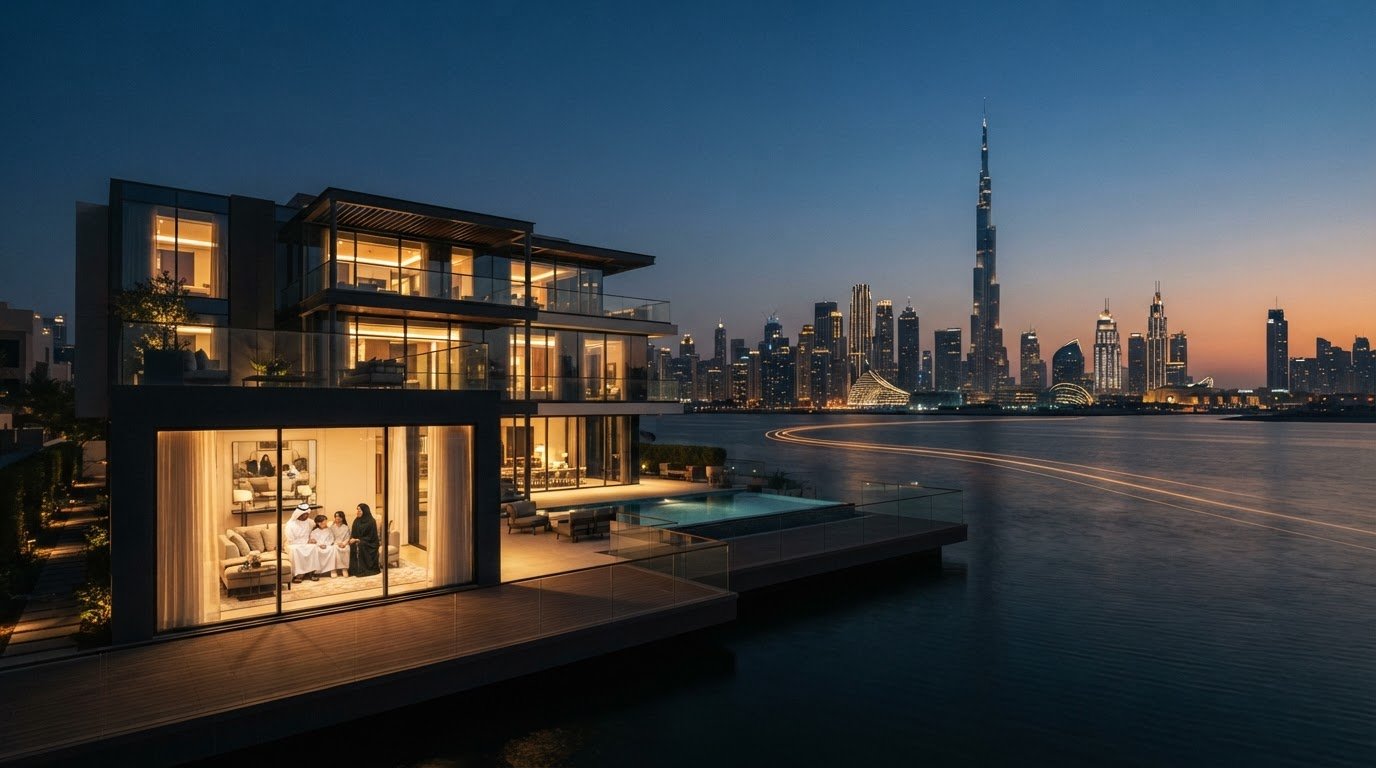
A Dubai property decision can shape more than a portfolio; it may also create a route to long-term UAE residency. For real estate investment for high-net-worth individuals in the UAE, the Golden Visa threshold is a concrete consideration: according to the Federal Authority for Identity, Citizenship, Customs & Port Security, real estate investments of AED 2 million or more qualify investors for the ten-year UAE Golden Visa.
The appeal extends beyond residency. Wealthy investors may assess Dubai property for its income potential, while families also weigh the UAE’s lifestyle and the possibility of establishing a longer-term base.
This guide explores what drives Dubai’s appeal, how to assess property returns in the context of your investment goals, and what the Golden Visa threshold means for investors and their families. It also explains how property choices can fit into a considered approach to wealth and residency.
Key Takeaways
- Match a Dubai property strategy to your investment goals, risk appetite and time horizon before comparing assets.
- Assess how the UAE’s appeal to wealthy families may complement a property portfolio and longer-term residency plans.
- Consider Dubai’s role as an international investment hub when weighing market access and portfolio diversification.
- Understand the real estate investment threshold for Golden Visa eligibility, then explore how property selection can align with that objective.
Why is the best real estate investment in dubai Highly Profitable Today?
UAE property can serve income, capital preservation, lifestyle, or residency objectives. The right asset depends on how it fits the investor’s portfolio and time horizon.
Property Strategies for Investor Goals
In 2026, opportunities for high-net-worth investors range from income-focused apartments to luxury homes and residency-aligned purchases. Match each asset to the intended holding period, risk appetite, and need for rental income or personal use. That figure is gross, so operating costs affect net returns. This approach helps investors compare a stable income strategy with potential appreciation or lifestyle value.
Golden Visa Eligibility Through Property
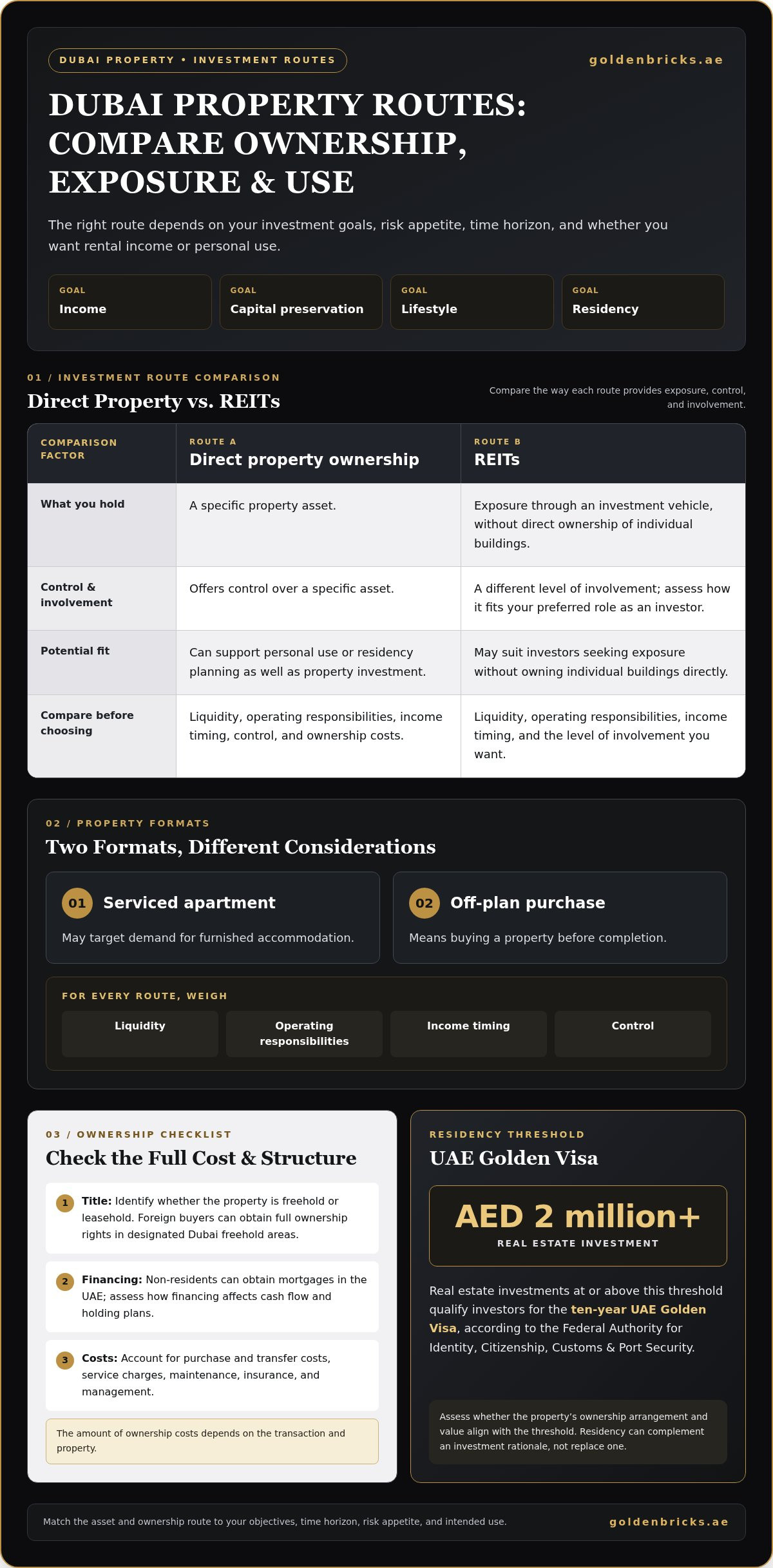
Property investment can support a UAE residency objective alongside portfolio planning. According to the Federal Authority for Identity, Citizenship, Customs & Port Security, real estate investments of AED 2 million or more qualify investors for the ten-year UAE Golden Visa. Investors should assess whether the property’s ownership arrangement and value align with that threshold. The residency benefit can be significant for families planning a longer-term UAE base, but it should complement, not replace, an investment rationale.
Foreign Ownership and Mortgages
Foreign buyers can obtain full ownership rights in designated Dubai freehold areas, and non-residents can obtain mortgages in the UAE. Before selecting a property, identify whether its title is freehold or leasehold, then assess how financing affects cash flow and holding plans. Purchase and transfer costs, alongside ongoing service charges, maintenance, insurance, and management, shape the true ownership cost. Their amount depends on the transaction and property. For company, trust, or family-office ownership, map the titleholder, beneficial ownership, governance, succession, and financing objectives before structuring the purchase.
Comparing Real Estate Investment Options
Direct property ownership offers control over a specific asset, while REITs provide exposure through an investment vehicle without direct ownership of individual buildings. A serviced apartment may target demand for furnished accommodation, while an off-plan purchase means buying before completion. Compare each route by liquidity, operating responsibilities, income timing, and control. In a global portfolio, these differences matter: direct ownership can support personal use or residency planning, while other options may suit investors seeking different levels of involvement.
UAE real estate investment appeal for wealthy families
For wealthy families, UAE property can connect capital deployment with lifestyle, income, and longer-term residence planning. The right balance depends on household needs, tax position, and the wider portfolio.
Tax Environment and Wealth Preservation
The UAE imposes 0% personal income tax and no capital gains tax on property appreciation. Homeowners also face no recurring property taxes. These advantages can leave more capital available for reinvestment or family objectives. Investors should distinguish personal tax treatment from transaction and operating costs. The useful comparison is wealth retained after ownership expenses, not headline appreciation alone.
Portfolio Diversification and Wealth Planning
Portfolio diversification means spreading capital across property types, locations, or income profiles instead of relying on a single asset. Families can balance residential, commercial, and mixed-use holdings, then consider overseas assets alongside UAE property. This can reduce reliance on one tenant market or use case. A household focused on lifestyle may prioritise a residence, while an income-focused investor may prioritise rental demand and property oversight.
A UAE home may serve as a residence, rental asset, or future family base. Golden Visa holders can sponsor spouses and children, and in some cases domestic staff. Families should consider schools, healthcare access, travel patterns, privacy, and suitability for leasing. A household dividing time between the UAE and overseas may value a home that serves for visits and can be rented when vacant.
Estate planning should document ownership, decision-making authority, liquidity needs, and succession priorities. Align the titleholder with family governance, and consider how future owners will fund maintenance and other costs. UAE property can form one part of a broader plan, with arrangements shaped by each family’s legal and financial position. Portfolio planning can connect asset selection with long-term objectives.
Dubai as an international investment hub
Dubai combines an established affluent population, active property transactions, and a broad range of investment locations. For rental demand, consider Downtown Dubai, Dubai Marina, and Business Bay; luxury investors also assess Palm Jumeirah, while appreciation depends on the individual asset and its market position.
Dubai’s Affluent Resident Population
Dubai’s affluent resident base supports demand for premium homes, investment properties, and high-quality rental accommodation. Dubai’s affluent resident base can contribute to demand for premium homes, investment properties, and high-quality rental accommodation. This concentration of wealth matters because it broadens the potential buyer and tenant pool. Investors can compare property type and location with the needs of residents and international buyers.
Dubai Real Estate Investment Advantages
Dubai’s advantages include international connectivity, active transactions, and varied residential markets. The Dubai Economic Agenda D33 aims to double the emirate’s economy by 2030, reflecting a long-range economic ambition. For investors, that context can inform assessments of stability and future demand, but it does not replace asset-level analysis. Compare neighbourhood access, property condition, likely tenant profile, and holding plans before allocating capital.
Real Estate Investment Returns
Rental returns in Dubai differ by property type, location, and demand. The market’s annual real estate rental yields average between 6.31% and 6.9%, while Jumeirah Village Circle frequently delivers gross rental yields exceeding 7.5%. These figures offer reference points, not a substitute for reviewing a specific property’s income and operating costs. Investors should also distinguish rental income from changes in the property’s value over time.
Dubai Real Estate Transaction Activity
Transaction activity indicates the scale of Dubai’s property market, while not guaranteeing future performance. Dubai Land Department recorded 1.6 million real estate transactions in 2023. That volume gives investors a substantial market context for comparing assets and locations. Pair transaction activity with rental demand, property characteristics, and economic conditions; a steady strategy weighs these factors together rather than treating market-wide activity as evidence of an individual property’s returns.
Golden Visa eligibility through real estate investment
For investors seeking a UAE base, property can align asset allocation with a residency objective. The Golden Visa offers renewable residency for ten years, giving eligible investors a longer-term framework for living, working, and studying in the UAE. This makes property selection a strategic decision, not simply a question of purchase price or potential income.
According to the Federal Authority for Identity, Citizenship, Customs & Port Security, real estate investments of AED 2 million or more qualify investors for the ten-year UAE Golden Visa. Treat this threshold as a core consideration when comparing assets. Assess the investment value alongside intended use, holding period, and portfolio objectives, so residency planning complements the property’s financial purpose.
Eligibility and investment merit are related, but they answer different questions. A property may meet the stated investment threshold while offering a particular balance of rental income, personal use, and long-term value. Compare these factors before committing capital. For example, a family prioritising a UAE residence may weigh daily living needs differently from an investor focused on rental demand.
The residency framework also matters to families. Golden Visa holders do not require a local sponsor and can include family members. They can sponsor spouses and children, and in some cases domestic staff. For households considering the UAE as a destination, this may support coordinated planning around residence, education, and family assets.
A disciplined assessment connects the threshold, ownership decision, and broader wealth plan. Consider how the property fits existing assets, whether its intended use supports your plans, and how ongoing ownership will be managed. The UAE’s family-friendly appeal can strengthen the rationale, but residency should remain one part of the investment case. Explore UAE property opportunities with your residency and portfolio objectives in view.
Golden Bricks Real Estate: Exclusive Off-Plan Projects
Golden Bricks Real Estate helps investors connect property choices with portfolio priorities through Exclusive Off-Plan Projects and Exclusive Ready Properties. If you are comparing a future purchase with a completed asset, Project Curation can support a more considered review of opportunities. Property Management provides ongoing oversight after acquisition.
The right route depends on your intended holding period, income objectives, preferred level of involvement, and whether the property may also serve personal or residency plans. A focused discussion can clarify which property pathway aligns with those priorities.
To discuss your property objectives, contact Golden Bricks Real Estate.
Shape Your Next Property Decision
A disciplined investment plan starts by defining what the asset must contribute: income, portfolio balance, family use, or a longer-term UAE base. For real estate investment for high-net-worth individuals in the UAE, turn those priorities into clear selection criteria, including location, property type, ownership horizon, and management needs.
Golden Bricks Real Estate offers Exclusive Off-Plan Projects, Exclusive Ready Properties, and Property Management. These options support different stages of an investor’s decision, from assessing a future purchase to overseeing an acquired property. Choose the focus that aligns with your objectives and the role property should play in your wider wealth plan.
Set your priorities, then discuss the property pathways that fit them. Contact Golden Bricks Real Estate to take the next considered step toward your UAE property goals.
Frequently Asked Questions
Why Choose Real Estate Investment Firms for HNWI?
Real estate investment firms can help HNWIs assess property values, compare opportunities, and align acquisitions with portfolio objectives. For real estate investment for high-net-worth individuals in the UAE, an advisory firm can help weigh location, tenant demand, ownership costs, and intended holding period together. Its role may also include property oversight after purchase, which can help investors balance UAE assets with commitments elsewhere.
Why invest in Dubai as a high net worth individual?
The UAE can suit investors seeking international property exposure, designated freehold ownership, and rental opportunities. Its tax environment and global connectivity may also inform a wider wealth strategy. Buyers considering a property for future residence and income should weigh location, ownership structure, and tenant demand. These factors help determine whether an asset supports their objectives beyond its prestige or profile.
Why is the UAE a Safe Haven for Wealthy High-Net-Worth Families?
The UAE appeals to wealthy families through its 0% personal income tax environment, international business links, and residency options. These features can inform wealth planning and lifestyle decisions. A family assessing real estate investment for high-net-worth individuals UAE should also consider market exposure, liquidity, maintenance, and succession arrangements. Evaluating these factors together helps clarify how UAE property may fit its wider financial plans.
What are current luxury property prices and rental yields in Dubai and Abu Dhabi?
Luxury property prices vary by location, property type, size, condition, and views, so compare similar assets rather than relying on one market-wide figure. Dubai’s annual rental yields average between 6.31% and 6.9%, while luxury real estate yields are reported between 8% and 10%. In Abu Dhabi, assess comparable local rents and purchase values to calculate a yield for the specific property.
What are the UAE property ownership rules for foreign investors and non-residents?
Foreign buyers can obtain full ownership rights in designated freehold areas of Dubai, and non-residents can obtain UAE mortgages. Rights depend on the property’s location and title arrangement, so distinguish freehold from leasehold before acquisition. For example, a non-resident using financing should assess loan obligations alongside expected rental income, ownership costs, and the planned holding period.
What residency visas can UAE property investors qualify for, and what are the investment thresholds?
Real estate investments of AED 2 million or more qualify investors for the ten-year UAE Golden Visa, according to the Federal Authority for Identity, Citizenship, Customs & Port Security. The UAE also has a five-year Retirement Visa and a two-year Investor Visa as residency options. These are distinct routes: the stated property threshold applies to the Golden Visa route, not automatically to every visa category.