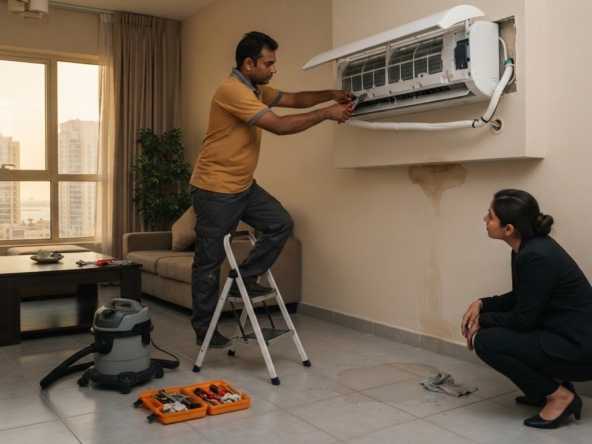
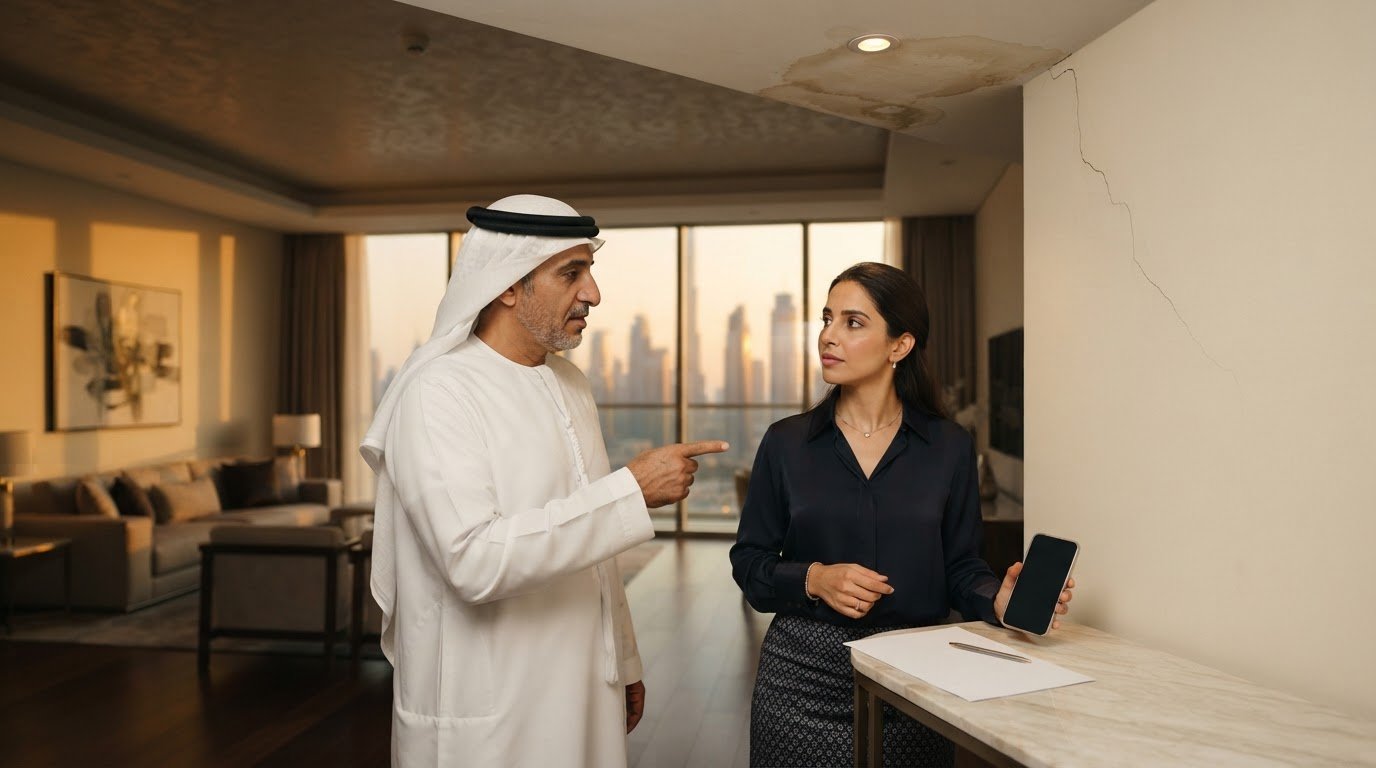
A landlord is generally responsible for maintenance and defects that affect a tenant’s intended use of a property, unless the tenancy contract says otherwise. Understanding landlord problems and how to solve them in the UAE starts with distinguishing major repairs from minor maintenance and reviewing the contract. If serious defects make the property unfit for use, ending the lease may also be an option to consider.
Tenants can reasonably expect essential repairs to be addressed, but responsibility depends on the defect and the tenancy contract. If maintenance is neglected, notify the landlord in writing, allow a reasonable time for repairs, and keep records of the problem and all communication.
This guide explains who typically handles rental repairs, what options may be available when a landlord does not act, and how to escalate a rental dispute in the relevant emirate. It also covers when an unfit property may justify seeking to end a lease, helping you assess the issue before deciding what to do next.
Key Takeaways
- Repair responsibility depends on the defect and the tenancy contract; major or structural issues are generally treated differently from minor maintenance.
- Report maintenance problems in writing, allow a reasonable time for action, and keep clear records of the defect and correspondence.
- Don’t automatically deduct repair costs from rent or arrange work without considering the contract and required permissions.
- If the landlord doesn’t address a serious defect, the relevant rental dispute authority may be able to consider repair orders, compensation, or other remedies.
- When defects make a property unfit for its intended use, lease termination may be an option to explore through the proper dispute process.
UAE Rental Disputes: Common Issues and How to Resolve Them?
According to UAE housing authorities, landlord-tenant relationships are primarily governed by applicable rental laws and federal decrees. For late or unpaid rent, landlords should follow the tenancy contract and the relevant national or local dispute procedure. A landlord may seek eviction during the lease if rent remains unpaid 30 days after formal written notice to pay is issued.
Rental Dispute Resolution Procedures
The Rental Disputes Settlement Center provides a formal way to resolve rental conflicts across the nation. It becomes relevant when direct discussions fail, as a settlement or decision can set out clear obligations for both parties involved in the tenancy agreement.
The local Rental Disputes Settlement Center features an Arbitration and Reconciliation Department to facilitate the settlement of rental disputes. Its Mediation and Conciliation Directorate must attempt settlement within 15 days of the parties’ first appearance. If an agreement is reached, the settlement can be documented through a binding contract; if conciliation fails, the dispute proceeds to a judge for adjudication. Complaints can be filed online, with hearings conducted remotely when necessary. Keep the tenancy contract, payment records, and written correspondence together for the case, and consult experts like Golden Bricks Real Estate for guidance on documentation.
RERA and Committee Complaints
A regulatory complaint and a complaint to a Rental Dispute Settlement Committee serve different purposes. Knowing the distinction helps landlords and tenants direct each issue to the appropriate regulatory process.
If an agent fails to respond or fulfil a promise, a tenant can consider raising the issue through an appropriate consumer complaint channel. For formal resolution of a rental dispute, consider the relevant Rental Dispute Settlement Committee or local municipal authority. UAE dispute bodies include specialized real estate settlement centers and municipal rental dispute sections established across the country. Keep messages, receipts, and the tenancy contract as supporting evidence.
Escalating Unresolved Repair Disputes
Escalation means taking an unresolved maintenance complaint to the rental dispute authority responsible for the jurisdiction where the property is located. This provides a formal route when written requests and a reasonable time for repairs have not resolved the issue.
Tenants can file a maintenance complaint with the local Rental Disputes Centre if the landlord fails to carry out essential repairs. The authority can order necessary repairs or financial compensation. Keep dated notices, photographs or videos of the defect, and replies from the landlord or agent. Do not automatically deduct repair costs from rent. Notify the landlord, allow a reasonable time to act, then seek reimbursement through the dispute process if the landlord refuses. Mediation may offer a chance to settle before a formal ruling is issued.
Handling Late or Unpaid Rent
If rent is late, document the missed payment and use the tenancy contract and local dispute process to address it properly. A clear paper trail protects both parties and makes the next legal step easier to identify.
Rental laws generally allow a landlord to seek eviction during the lease term if rent remains unpaid 30 days after a formal written notice to pay is served. The notice and payment records matter significantly, so retain the contract, proof of amounts received, and the written demand. Landlords should use the relevant local rental dispute authority and follow the applicable tenancy procedure. A landlord’s complaint should present the payment history and correspondence clearly, rather than relying on informal demands alone.
What are a tenant’s rights if the landlord fails to carry out necessary maintenance?
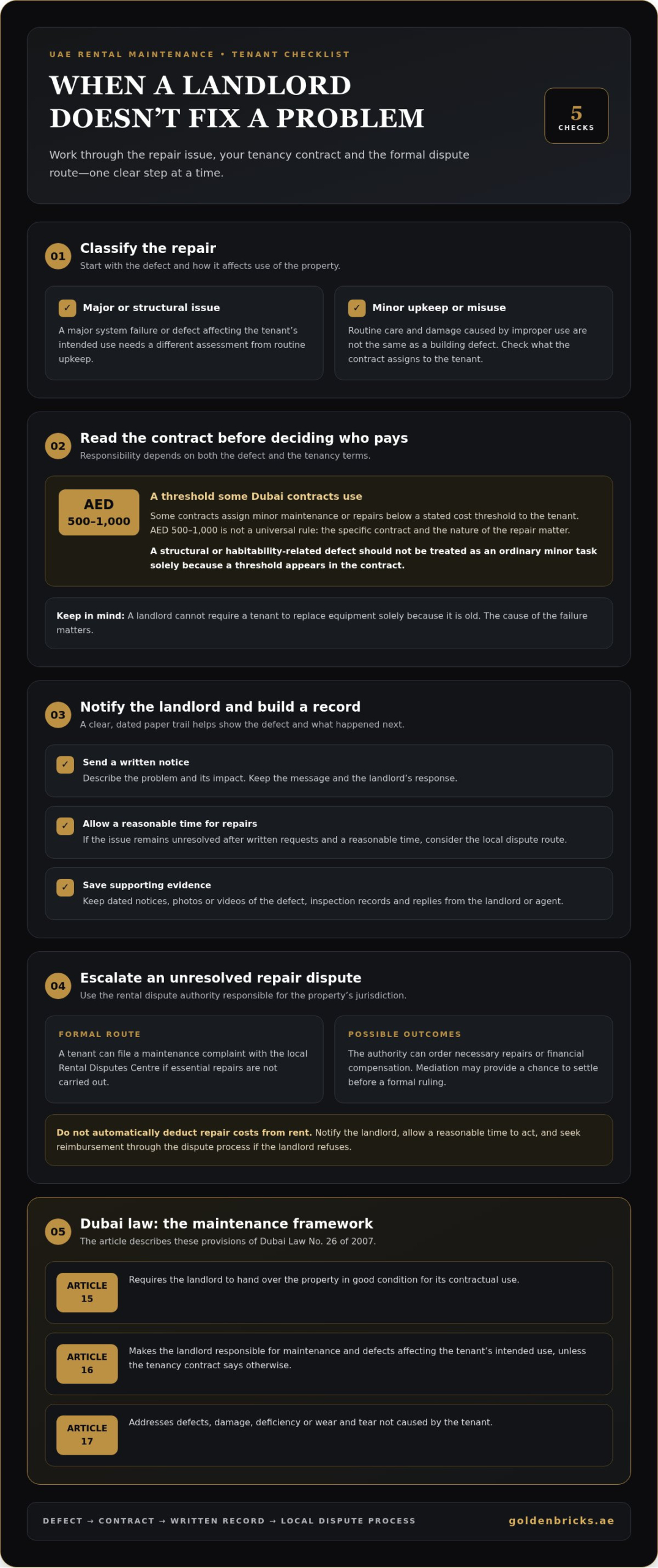
In Dubai, Article 16 of Dubai Law No. 26 of 2007 makes the landlord responsible for maintenance and defects affecting the tenant’s intended use, unless the tenancy contract says otherwise. For tenants researching “landlord problems and how to solve them UAE,” the key distinction is between a major defect and minor routine upkeep. A failed major system can affect use of the home, while a small task may fall within the tenant’s agreed obligations.
Article 15 requires the landlord to hand over the property in good condition for its contractual use. Article 17 also addresses defects, damage, deficiency, or wear and tear not caused by the tenant. A tenant who discovers a leak, electrical fault, or unusable air conditioning should notify the landlord in writing, describe the impact, and keep the message and response. Photos, videos, and inspection records can help establish the condition and timeline.
For example, a tenant may be responsible for damage caused by improper use, while a failure in an ageing system may need a different assessment. A landlord cannot require a tenant to replace equipment solely because it is old. The cause of the failure and the contract terms matter. Record the condition, report the fault, and understand the basis of any repair charge before accepting it.
If the landlord doesn’t respond, send a formal written follow-up identifying the defect, the original notice, and the repair requested. Allow a reasonable period for action, taking account of urgency and the effect on safe, intended use. Keep receipts and correspondence. Tenants can’t automatically deduct repair costs from rent, and Article 19 restricts maintenance or restoration work without landlord permission and required licences.
Q: Can a Dubai tenancy contract make the tenant responsible for all repairs?
No. A Dubai tenancy contract may assign minor maintenance to the tenant, but that does not automatically make every repair the tenant’s responsibility. Article 16 of Dubai Law No. 26 of 2007 places responsibility for defects affecting intended use on the landlord unless the contract says otherwise. Structural defects and problems affecting habitability require particular attention.
Article 17 addresses defects, damage, deficiency, or wear and tear not caused by the tenant. A faded wall or ageing component may reflect normal use; a broken fixture damaged through misuse may be treated differently. Photograph the property’s condition at move-in and report new damage promptly. Inspection records and dated correspondence can help distinguish ordinary wear from tenant-caused damage in rental disputes.
Some tenancy contracts set a cost threshold for minor repairs, such as AED 500. Read the clause carefully: a threshold does not by itself settle responsibility for a structural fault or a defect affecting habitability. Before paying, compare the repair description with the contract’s maintenance responsibilities and document why the work is needed. Tenants should not deduct repair expenses from rent automatically or begin restoration without considering permission and licensing requirements.
Registration also matters when parties need to enforce tenancy rights. In Dubai, Ejari registration is mandatory for most leases, and a registered contract is usually required for a formal complaint. Keep the Ejari record alongside the signed contract, rent receipts, and repair notices. In Abu Dhabi, retain tenancy documents and payment records for any local rental process.
For eviction, Dubai law requires at least 12 months’ notice for the stated grounds upon expiry. Under Article 25(1), a landlord may seek eviction for a lease breach if the tenant fails to correct it within 30 days after being asked. For unpaid rent, eviction may be sought if rent remains unpaid 30 days after written notice to pay. Tenants challenging an eviction should preserve the notice, contract, payment evidence, and relevant correspondence.
A proposed rent increase in Dubai must match the RERA rental index. A tenant who disputes an increase can retain the notice and contract, then raise the matter through the rental dispute process. Article 34 prohibits landlords from turning off basic services such as water, electricity, or air conditioning. A tenant facing a service disconnection or lock change can document the event and bring the complaint to the relevant rental authority; the formal process can address the alleged interference.
Clear screening and communication can also prevent avoidable conflict. Landlords who explain payment terms, property condition, and repair responsibilities before signing create a stronger basis for tenant retention. Tenants benefit from reviewing those terms before committing, then reporting defects through a documented channel rather than relying on verbal arrangements.
Landlord responsibilities for structural and major system repairs
Structural defects and failures in major systems are generally the landlord’s responsibility in UAE rental disputes, while minor maintenance may fall to the tenant. In Dubai, Article 16 of Law No. 26 of 2007 assigns the landlord responsibility for defects affecting intended use unless the tenancy contract says otherwise. A roof leak, serious plumbing failure, or central air-conditioning breakdown can affect that use and calls for prompt assessment.
In an emergency, limit work to addressing the immediate risk rather than authorising a broad renovation. If a tenant pays for necessary work, retain the inspection findings, proof of notice, approval, and receipts. For critical property access issues such as malfunctioning garage systems or security shutters, professional contractors like MAXWELL DOORS can supply the itemised invoices and technical reports required for dispute documentation. Repair costs cannot automatically be deducted from rent. Reimbursement can instead be raised through the relevant rental dispute process, where the authority can assess the contract, evidence, and whether the work addressed a landlord responsibility.
Repainting at the end of a tenancy depends on the property’s recorded condition, ordinary use, and any damage beyond normal wear. Compare move-in and move-out photographs, then identify specific marks or alterations rather than treating every change in paint as damage. Article 17 addresses defects, damage, deficiency, or wear and tear not caused by the tenant. A documented comparison helps both parties distinguish routine ageing from misuse.
Lease termination when a property is unfit for use
A tenant may seek to end a UAE lease without penalty if the landlord’s failure to maintain the property makes it unfit for habitation or use. The key issue is how the defect affects the property’s intended use, not simply whether a repair is inconvenient. For example, a persistent failure affecting essential services may carry more weight than a cosmetic defect.
In Dubai, Law No. 26 of 2007 provides the landlord-tenant framework, including maintenance duties and the property’s intended use under the tenancy agreement. Before considering termination, the tenant should identify how the defect affects occupation, then gather evidence showing its severity and duration. An inspection report, dated photographs, and a record of affected rooms or facilities can clarify the practical impact. These details also help make landlord problems and how to solve them in the UAE a question of evidence rather than assumption.
Give written notice describing the problem, explaining how it affects use, and requesting corrective action. Keep the notice, delivery record, replies, and inspection findings together. If the landlord responds, record the proposed repair and whether it addresses the defect. If the problem continues, this timeline helps show that the tenant raised the issue and gave the landlord an opportunity to act.
Sending a notice does not automatically end a lease. If the landlord fails to resolve a serious defect, the tenant can present the evidence and tenancy agreement to the relevant rental dispute authority. In Dubai, the Rental Disputes Centre can consider rental claims, including requests for remedies related to maintenance disputes. The authority can assess the defect, its effect on intended use, the landlord’s response, and the contract terms.
Before leaving, record the property’s condition and communicate the proposed next step in writing. Keep rent payment records, utility statements, inspection documents, and correspondence. Do not simply abandon the property or assume the lease has ended. A formal dispute may be needed to establish each party’s rights and obligations. The same records can help resolve claims about rent, the deposit, or damage after departure.
For tenants and landlords considering how to resolve landlord problems and how to solve them in the UAE, connect each claim to evidence: the defect, its effect, written requests, and responses. Prompt maintenance action and documented repair arrangements can help prevent a serious defect from escalating into a termination dispute. If the tenancy must change, explore properties to buy, sell, or lease as a considered next step.
Golden Bricks Real Estate: Exclusive Off-Plan Projects
Golden Bricks Real Estate offers property options and management support for readers planning their next move after a rental dispute. If you are looking for another home, explore its Exclusive Ready Properties or Exclusive Off-Plan Projects and consider how each fits your intended use and investment priorities.
For property owners, Golden Bricks’ Property Management service supports the ongoing oversight of rental assets, including coordination of maintenance responsibilities and tenant communication. Project Curation offers a considered approach to reviewing property opportunities. These services are relevant when your next step is acquiring a property or managing an existing asset, rather than resolving a formal legal claim.
To discuss your property requirements, contact Golden Bricks Real Estate.
Make Your Next Property Decision With Clarity
Resolving a rental issue can prompt a broader review of what you need from a property. A considered approach to landlord problems and how to solve them in the UAE looks beyond the immediate dispute: decide whether to remain in the home, seek a different property, or improve oversight of an investment asset.
Golden Bricks Real Estate offers Exclusive Ready Properties and Exclusive Off-Plan Projects for those considering a new property, as well as Property Management for owners seeking ongoing support with rental assets. The right next step depends on your priorities, the property’s intended use, and whether you are making a personal housing or investment decision.
If you are ready to explore those options, contact Golden Bricks Real Estate to discuss your property requirements. A well-considered decision can help you move forward with greater confidence.
Frequently Asked Questions
Is the landlord responsible for all maintenance in a Dubai rental?
No. Dubai Law No. 26 of 2007 assigns landlords maintenance and defect responsibilities affecting intended use, unless the tenancy contract provides otherwise. A contract may place routine, minor tasks on the tenant, while structural faults or major system failures require separate consideration. For example, a tenant’s small upkeep task differs from a building leak affecting several rooms. Check the relevant clause and the cause of the problem before assigning responsibility.
Can I Withhold Rent Until the Landlord Fixes the Problem?
No. Tenants should not automatically withhold rent or deduct repair costs when maintenance is outstanding. Notify the landlord in writing, allow a reasonable time for action, and keep proof of rent payments and repair requests. If the landlord refuses to reimburse eligible repair costs, raise the claim with the relevant rental dispute authority. If a Dubai landlord refuses to accept rent, a tenant can use the Rental Disputes Centre deposit and offer procedure.
Q: Who pays for AC repairs in a Dubai rental apartment?
What If the Landlord Is Outside the UAE?
A landlord’s location does not remove the need to follow the tenancy contract and applicable rental rules. Send written maintenance notice using the contact details or representative named in the agreement, and retain delivery records and replies. If communication remains ineffective, keep the contract, evidence of the defect, and payment records together for the competent rental dispute authority. A property representative may help relay requests, but document the landlord’s instructions and any repair approvals.
What are the most common landlord problems in the UAE?
Common disputes concern delayed maintenance, who pays for repairs, rent arrears, proposed increases, renewal terms, deposits, and the property’s condition at move-out. For example, a disagreement over a damaged appliance may depend on whether misuse or ordinary wear caused the fault. Written notices, payment receipts, inspection records, and contract clauses help clarify the issue. The appropriate complaint route depends on the emirate where the property is located.
What UAE laws govern landlord-tenant disputes and differ by emirate?
Rental rules and dispute procedures vary by emirate. In Dubai, Law No. 26 of 2007, as amended by Law No. 33 of 2008, primarily governs landlord-tenant relationships. Federal Law No. 5 of 1985 is also identified in the framework for property disputes. Dispute bodies include Dubai’s Rental Disputes Centre, Abu Dhabi’s Real Estate Settlement Centre (Taswea), and Sharjah Municipality’s rental dispute sections.
How can landlords resolve disputes over rent increases, renewals, and lease termination?
Landlords should begin with the tenancy contract, the relevant notice, and a clear record of rent and correspondence. In Dubai, a proposed rent increase must match the RERA rental index. For stated eviction grounds upon expiry, Dubai law requires at least 12 months’ notice. If the parties cannot agree, they can take the documented issue to the relevant rental dispute authority, where mediation may be attempted before a formal ruling.