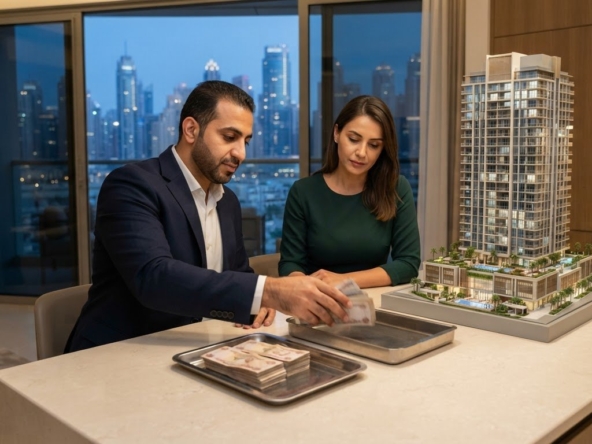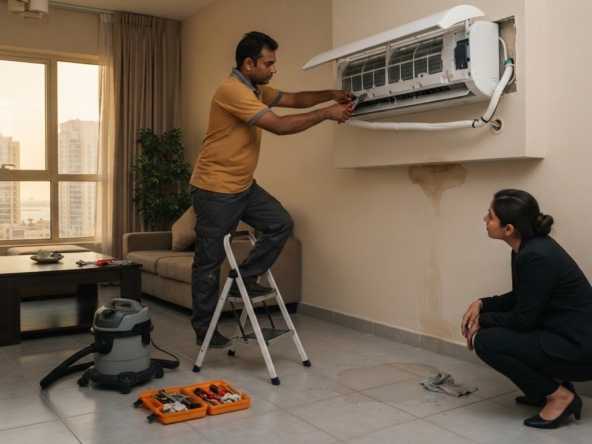

Property fraud in Dubai is not widespread, but isolated cases occur. Knowing how to avoid real estate scams in the UAE starts with verifying the agent, listing, and project through official records, viewing the property before paying, and using traceable payment methods. For an off-plan purchase in Dubai, pay through the project’s RERA-approved escrow account, not a personal or ordinary company account.
It is reasonable to be cautious when a listing looks unusually attractive or someone pressures you to transfer a deposit quickly. A measured process helps protect your funds without making every transaction a source of uncertainty.
This guide explains how to check an agent’s RERA ID, confirm off-plan registration and escrow details, assess a listing, and review key sale documents. It also explains what to do if a payment request or sales tactic raises concern, so you can proceed with greater clarity at each stage.
Key Takeaways
- Use traceable payment methods and confirm off-plan payments go to the project’s RERA-approved escrow account.
- Check project registration and Oqood records, then review the Sales and Purchase Agreement before proceeding.
- Verify an agent’s RERA ID and treat unusually low listings or requests for quick deposits as reasons to pause.
- View the property before paying and review ownership, restrictions, and required transfer documents.
- Take time to assess the documents and payment route; pressure to decide immediately should prompt careful scrutiny.
1. Avoiding cash and untraceable payments
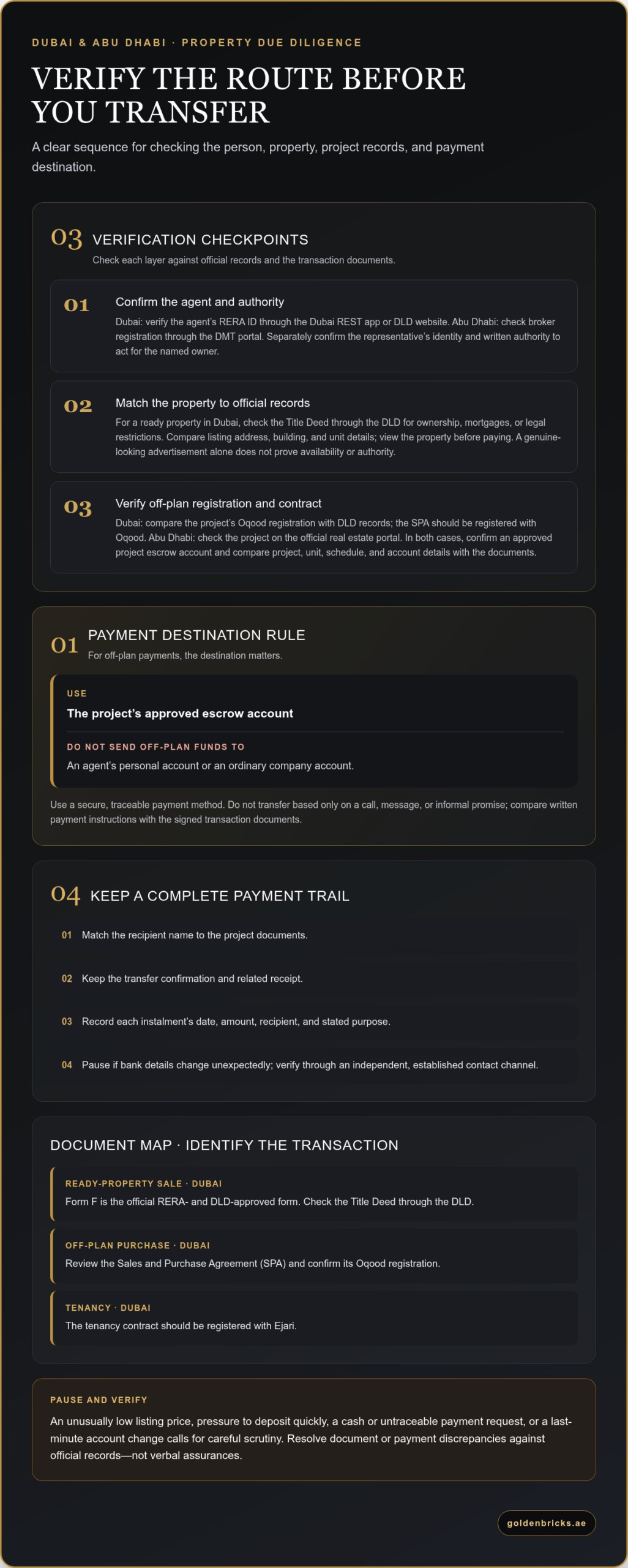
Payment security begins with a clear destination, a documented purpose, and proof of transfer. In Dubai, off-plan payments should go to the project’s RERA-approved escrow account, not an agent’s personal account or an ordinary company account. For off-plan units in Abu Dhabi, use an approved escrow account. These safeguards help connect each payment to the relevant property transaction.
A request for cash or an untraceable payment method deserves scrutiny. Cash may leave you without a clear record of who received the funds or why. Do not transfer money based only on a call, message, or informal promise. Ask for written payment instructions that identify the project, recipient, and purpose. Compare those details with the signed transaction documents before sending funds.
Use a secure, traceable payment method and retain proof of the transfer. Keep the payment confirmation with the agreement, receipt, and written instructions. Check that the recipient named in the payment record matches the authorized destination in your documents. If an intermediary changes bank details at the last moment, pause and verify the change through an established, independent contact channel.
- Match the recipient name to the project documents.
- Keep the transfer confirmation and the related receipt.
- Reject requests to send funds to an individual’s account.
- Pause if payment instructions change unexpectedly.
Off-plan payment scams can exploit urgency or confusion about where instalments should go. For example, someone may present a request that resembles a developer’s instruction but names a private account. A convincing logo or polished message does not prove the account is legitimate. Check the destination against the project’s official payment documents before authorizing a transfer.
For an off-plan purchase, confirm that the project has an approved escrow account and that the payment route leads to it. Do not treat a reservation message or verbal assurance as a substitute for written documentation. Keep a record of each instalment, including its date, amount, recipient, and stated purpose. This creates a clear payment history to compare with the agreement.
For a ready property, retain evidence of every payment and ensure the recipient and purpose are documented. If you cannot obtain a receipt or written acknowledgment, stop before paying further. A clear payment trail is a practical part of how to avoid real estate scams in UAE. It also helps distinguish a documented transaction from pressure to transfer funds without an accountable record.
2. Checking off-plan project registration and escrow
Before committing to an off-plan unit, compare the project and developer details with official records. In Dubai, check the project’s Oqood Registration against Dubai Land Department (DLD) records. Confirm that the project is registered and has an approved escrow account. A brochure or sales message alone proves neither.
Dubai’s Sales and Purchase Agreement (SPA) is the relevant contract for an off-plan sale and should be registered with Oqood. Compare the SPA’s project and unit details with DLD records. Check that the payment schedule and escrow details align with the contract. Differences in project names, unit identifiers, or payment destinations are reasons to pause and clarify the documents.
Dubai’s property oversight has distinct roles: the DLD regulates property transactions, while RERA oversees broker licensing, project registration, and escrow compliance. Use the Dubai REST app or DLD website to verify an agent’s RERA ID. Confirm that the registered identity matches the person conducting the transaction instead of relying only on a business card or message signature.
In Abu Dhabi, check broker registration through the Department of Municipalities and Transport (DMT) portal. Off-plan developers must list their projects on the official real estate portal. Confirm the project listing and approved escrow account there. These checks help establish that the project and the person presenting it correspond to official records.
For a ready-property sale in Dubai, Form F is an official RERA- and DLD-approved form. For an off-plan purchase, use the SPA registered with Oqood. A Dubai tenancy contract should be registered with Ejari. These are distinct processes, so identify whether you are dealing with a ready sale, off-plan purchase, or tenancy before signing.
When buying or renting through a representative, compare their identity and written authority with the named owner and property documents. For a ready property in Dubai, check the Title Deed through the DLD to confirm ownership and identify mortgages or legal restrictions. Verify a Dubai agent’s RERA ID separately: a valid ID alone does not establish authority to act for a specific owner.
Keep a consistent set of records: property or project details, the signed agreement, agent identification, registration information, and payment instructions. If a document names a different project, owner, representative, or account, stop before signing or transferring funds. Resolve the discrepancy against official records, not verbal assurances. Reviewing the documents one by one makes it easier to assess registration, contract status, and a representative’s authority before committing.
3. Fake agents and phantom property listings
A genuine-looking advertisement does not prove that the property exists, is available, or belongs to the person promoting it. In Dubai, fake listings may advertise unavailable homes or prices far below comparable properties nearby. Some are designed to prompt quick deposits before a buyer can inspect the unit or verify the representative. Treat an unusually low price as a reason to investigate, not as proof of fraud.
To confirm a Dubai listing, compare its address, building, unit details, asking terms, and agent identity. Verify the agent’s RERA ID through the Dubai REST app or the Dubai Land Department website. Then arrange an in-person viewing before paying. If the agent refuses access, changes the location, or says the property cannot be viewed, stop communicating and do not transfer funds.
For a rental, confirm that the person showing the unit has authority to offer it. Match the property details in the advertisement with what you see during the viewing. Ask for a proposed tenancy agreement that correctly identifies the property and parties. Be particularly cautious if someone requests a deposit before a viewing, contract, or clear proof of authority. Rental deposit scams may involve collecting money for a home the person does not own or manage, then disappearing without signing an agreement or handing over keys.
Abu Dhabi listings may carry a Madhmoun-verified label. Verify the specific listing and its details through Madhmoun rather than relying on a screenshot or an agent’s claim. Compare the property, advertiser, and contact information in the record with the advertisement. If they differ, pause before sharing documents or discussing payment.
In Dubai, the DLD’s Real Estate Violation System (RVS) provides a channel for complaints about agents, companies, and property advertisements. If you need to report a concern, keep the advertisement, messages, agent details, and payment request together. Preserve original screenshots and correspondence so the listing and its claims remain clear.
Use these practical checks before progressing:
- Verify the Dubai agent’s RERA ID in Dubai REST or on the DLD website.
- View the actual property, or have someone you trust attend.
- Compare the advertised details with the unit and any Madhmoun record.
- Pause if the price is far below comparable local listings or access is refused.
- Report suspicious Dubai advertisements through the RVS.
To confirm a genuine listing and avoid fake rental offers in the UAE, verify the person, match the property details, view the unit, and do not pay until those checks are complete.
4. Are Real Estate Scams Common in Dubai?
Property fraud in Dubai is not widespread, but isolated cases occur. Buyers should take sensible precautions without assuming every transaction is unsafe. Common warning signs include rental deposits collected by someone without authority, phantom listings, and pressure to transfer money before viewing a property.
For a ready property, verify ownership before signing or paying. The Dubai Land Department says buyers can check a Title Deed to confirm ownership and identify mortgages or legal restrictions. Match the property details and seller’s identity against the deed. If the named seller differs from the person negotiating, establish that person’s written authority before proceeding.
View the actual property before paying. If you cannot attend, ask someone you trust to inspect it and confirm the location and unit. A refusal to arrange a viewing is a clear reason to stop communication. This is especially important for rental deposits: a scammer may collect money for a home they do not own or manage, then disappear without signing a contract or handing over the keys.
Dubai ownership transfers also involve specific documents and procedures. A valid No Objection Certificate (NOC) from the developer or building management confirms that the seller has paid service fees and charges. The Dubai Land Department will not transfer ownership without one. Complete the transfer at a DLD-approved Trustee Office so the property is officially registered in your name.
If you suspect fraud in Dubai, pause the transaction, do not transfer funds, preserve messages and documents, and report suspected property fraud or theft to Dubai Police. You can also raise transaction concerns with the Dubai Land Department or RERA. In Abu Dhabi and other emirates, report suspected fraud to local police and the relevant property authority.
Before a transfer, use this focused review:
- Match the seller’s identity to the Title Deed.
- Review the deed for mortgages or legal restrictions.
- Inspect the property before paying a deposit.
- Confirm the NOC and complete transfer at a DLD-approved Trustee Office.
- Keep transaction records and report suspected fraud to the appropriate authority.
These checks help distinguish isolated fraud attempts from legitimate transactions. A verified Title Deed, an in-person viewing, and a properly completed transfer provide practical safeguards for buyers in Dubai.
5. Avoiding pressure to make a quick decision
A deadline can be legitimate, but urgency should never replace verification. A seller might say another buyer is ready to pay immediately. Treat that as a prompt to review the documents, not a reason to skip the checks. Before committing, independently confirm the property, seller, agent, contract, and payment route.
Ask for important claims in writing. If an agent says a unit is reserved, request documentation showing the unit and reservation terms. If a seller promises a repair or a particular handover condition, have it recorded in the agreement. Verbal assurances may be difficult to rely on if the final documents say something different.
Use a deliberate sequence before making a payment:
- Review the relevant agreement and match its property details.
- Confirm who has authority to sell or rent the property.
- Check the payment recipient against the written transaction documents.
- Record unresolved questions and seek clear answers before proceeding.
This sequence is useful when pressure comes through calls or messaging apps. Someone might demand a deposit while providing only a partial contract or unclear account details. Do not let repeated messages turn an incomplete file into an approved transaction. Save the messages, request the missing documents, and pause transfers until the details align.
Compare the proposed terms with the property and transaction records. For a Dubai off-plan purchase, check the SPA and Oqood registration details. For a ready-property sale, review Form F and the Title Deed. For a tenancy, make sure the proposed contract identifies the correct property and parties. A rushed signature can make inconsistencies harder to resolve later.
Be especially cautious if pressure changes the agreed process. Warning signs include a new payment recipient, a viewing suddenly becoming unavailable, or a representative asking you to sign blank or incomplete documents. Keep a copy of every version you receive. If the other party will not provide a complete document or allow reasonable time to review it, do not sign or pay.
Set your decision criteria before negotiations begin. Identify the documents you need, the details to reconcile, and the questions that require written answers. This prevents a claimed deadline from becoming your only decision factor. A genuine opportunity can withstand careful review; a demand for immediate action does not establish ownership, authority, or accurate terms.
For a considered next step, explore curated UAE property opportunities and assess each option against your priorities and transaction checks.
Golden Bricks Real Estate: Exclusive Off-Plan Projects
Golden Bricks Real Estate offers Exclusive Off-Plan Projects for buyers assessing property opportunities across the UAE. Its Project Curation can help investors compare project options with their priorities, while Exclusive Ready Properties offer an alternative for those seeking completed homes. Property Management supports owners after acquisition, extending the relationship beyond the initial transaction.
Turn to Golden Bricks Real Estate after completing your document checks, when you want to explore curated property options or consider how a purchase fits your objectives. Review the relevant project information carefully and apply the verification steps in this guide before committing.
To discuss your property requirements, contact Golden Bricks Real Estate or visit goldenbricks.ae.
Make your next property decision with clarity
A property purchase can shape your financial plans long after the transaction is complete. Treat due diligence as part of your investment discipline, not as an obstacle to moving forward. A useful next step is to define what you need from the property, identify the documents and decisions that matter, and assess each opportunity against those priorities.
For your next property move, Golden Bricks Real Estate offers Exclusive Off-Plan Projects, Exclusive Ready Properties, and Property Management. These services can support different stages of ownership, from selecting an opportunity to managing an acquired asset. Knowing how to avoid real estate scams in UAE also means choosing opportunities carefully and keeping your decision criteria in view.
When you are ready to explore property options aligned with your objectives, contact Golden Bricks Real Estate. Proceed with clear priorities and the confidence that comes from a deliberate decision.
Frequently Asked Questions
Are Real Estate Scams Common in Dubai?
Before committing, check that each person, property, and document aligns. A legitimate-looking advertisement may still describe a unit that is unavailable. Treat inconsistencies as a reason to pause and preserve the relevant messages and documents. If you suspect property fraud or theft, report it to Dubai Police.
How can I verify a UAE real estate agent and broker license?
Use the licensing channel for the emirate where the property is located. In Dubai, check an agent’s RERA ID through the Dubai REST app or Dubai Land Department website. In Abu Dhabi, check broker registration through the Department of Municipalities and Transport portal. Compare the registered identity with the person communicating with you, including their name and agency, rather than relying on a profile image or business card.
How do I check a property title deed with the Dubai Land Department or relevant emirate authority?
For a ready property in Dubai, use the Dubai Land Department’s title deed check to confirm ownership and identify mortgages or legal restrictions. Compare the deed’s property details with the unit being offered and the seller named in the transaction. For a property in another emirate, use the relevant emirate property registry. An image of a document sent by the seller is not a substitute for checking the official record.
How can I verify a real estate project and developer in the UAE?
For a Dubai off-plan purchase, compare the project’s Oqood Registration with DLD records, then confirm that the project has an approved escrow account. Check whether the Sales and Purchase Agreement is registered with Oqood and whether its project details match the records. In Abu Dhabi, check the project on the official real estate portal. Confirm that the developer and project identifiers match across the listing and contract.
What are the rules for paying property deposits and commissions in the UAE?
Deposit and commission terms should be clear in the transaction documents before you pay. Check who receives each amount, what it covers, and how the agreement treats cancellation or a failed transaction. For Dubai off-plan payments, use the project’s RERA-approved escrow account, not a personal or regular company account. Avoid cash or untraceable transfers, and retain receipts and payment confirmations for your records.
What are the warning signs of UAE property investment scams and guaranteed-return offers?
Examine guaranteed-return claims carefully, especially if the person cannot explain their basis in the written investment terms. Watch for pressure to transfer funds before reviewing documents, unclear payment recipients, or figures that appear only in promotional messages. Ask how the return is calculated, what conditions apply, and where those terms appear in the contract. A confident sales claim is not proof of performance.
What buyer and tenant protections apply to UAE real estate transactions?
Protections and procedures vary by emirate and transaction type. In Dubai, rental contracts should be registered with Ejari, and rental disputes can go to the Rental Disputes Centre under the DLD. Abu Dhabi real estate companies must follow customer protection guidelines. Keep signed agreements, payment records, and messages together. If a dispute involves suspected fraud or theft in Dubai, report it to Dubai Police.