

What makes property management effective is not the number of tasks handled, but how well day-to-day oversight supports an asset’s objectives. For owners coordinating tenants, leases, and maintenance from a distance, property management services dubai can bring these responsibilities into a clear working arrangement. The key is to understand what the manager will handle, which decisions remain yours, how updates will be shared, and what records you can expect.
These questions matter whether you own residential or commercial property. A clearly defined owner-manager relationship helps organise tenant communication, lease administration, and maintenance oversight. This guide explains what professional management typically involves and how to assess its scope, accountability, and fit with your priorities. It also outlines how Golden Bricks Real Estate supports owners through tenant relations, lease administration, and maintenance supervision. With responsibilities and decision-making agreed in advance, you can make a more informed choice about the management arrangement your property needs.
Key Takeaways
- Define the management mandate clearly, separating ongoing oversight from brokerage, development, and short-term vacation rental operations.
- Understand how tenant relations, lease administration, and maintenance supervision work together to support consistent oversight.
- Use a responsibility-and-records framework to agree owner decisions, communication expectations, and accountability within property management services dubai.
- Prepare for a smoother handover by organising property, tenancy, lease, and maintenance information before management begins.
- Align Golden Bricks’ management scope with your objectives for residential or commercial property.
What Property Management Services Dubai Owners Need to Understand
Property management is the ongoing oversight of a property on an owner’s behalf. The owner agrees on the manager’s responsibilities and retains direction over the asset’s objectives. The broader What is Property Management overview describes the discipline; in practice, the written mandate determines what the manager does, how decisions are made, and what information the owner receives.
Property management differs from a brokerage transaction, such as buying, selling, or leasing a property, which focuses on a particular deal. Management is a continuing arrangement for operational oversight. It is also distinct from property development and short-term vacation rental operations, which involve different activities. Understanding these boundaries helps owners assess whether the proposed management scope matches the support they need.
What does a property manager handle for an owner?
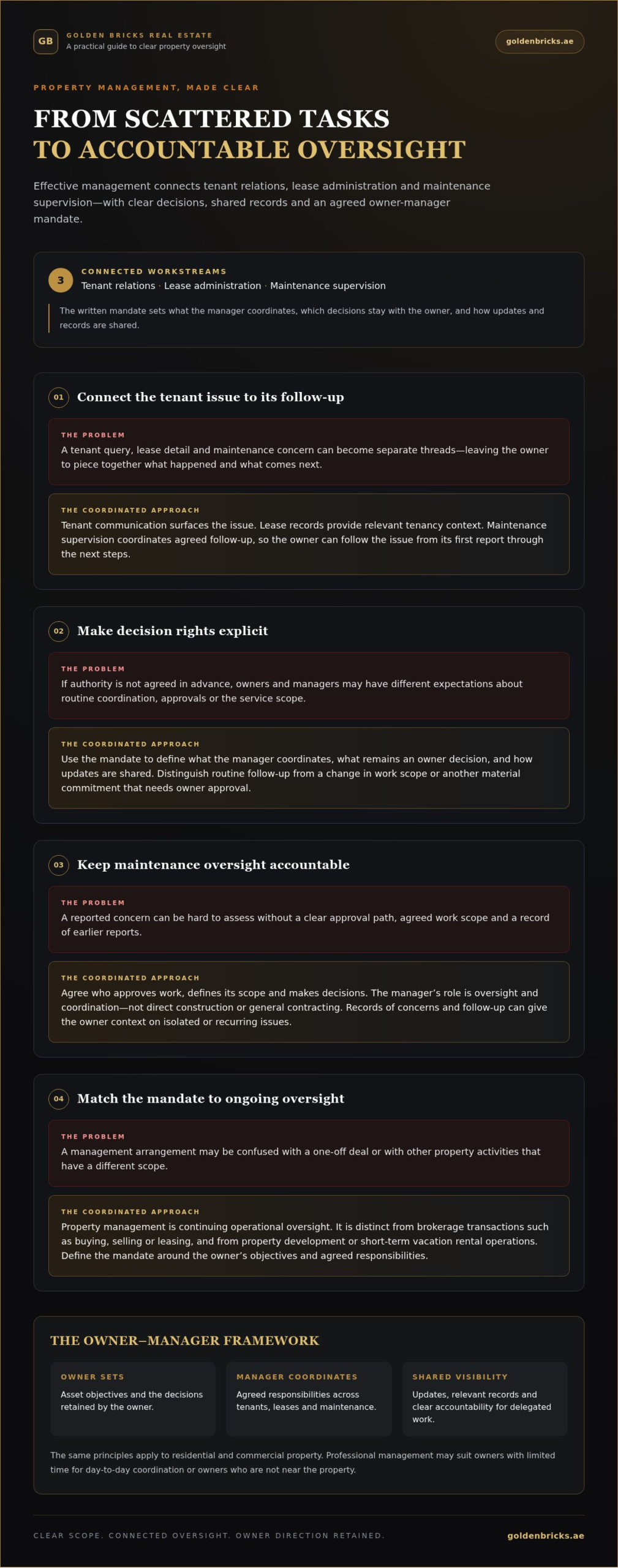
Core responsibilities may include tenant relations, maintenance supervision, and lease administration. These workstreams connect. A tenant may report an issue, maintenance supervision can coordinate its follow-up, and lease administration keeps the relevant tenancy information organised. When the process is clear, the owner can follow an issue from the first report through the agreed next steps instead of piecing together separate updates.
The mandate defines the manager’s role. It should state which matters the manager coordinates, which decisions remain with the owner, and how information is shared. For example, the agreement can distinguish routine follow-up from a change in work scope or another material commitment that needs owner approval. A one-off leasing transaction may support an owner at a specific point; ongoing management is a continuing arrangement with responsibilities agreed in advance. Clear boundaries reduce the risk of mismatched expectations about authority or service scope.
Which owners may benefit from professional management?
Professional management can suit owners with limited time for day-to-day coordination, as well as owners who are not near the property. Individual investors may value having a consistent point of coordination for tenant matters, lease records, and maintenance oversight rather than managing each workstream separately.
The same principles apply to residential and commercial ownership. Operational details vary by property and mandate, but the owner’s role remains central: set the asset’s objectives, retain agreed decision-making authority, and receive visibility into delegated responsibilities. The manager coordinates work within that framework; the arrangement does not transfer the owner’s investment priorities to the manager. This balance allows operational tasks to be delegated while keeping direction and accountability clear.
How Property Management Services Coordinate Tenants, Maintenance, and Leases
Effective oversight depends on how responsibilities connect, not simply on whether several tasks appear in a service list. A tenant query may reveal a maintenance concern. The lease provides context for the tenancy, while maintenance supervision helps the owner understand what follow-up may be needed. The value of a management arrangement lies in coordinating these workstreams while keeping decisions and accountability clear.
How tenant relations and lease administration work together
A clear communication pathway gives tenants an understood point of contact for routine tenancy matters and helps relevant information reach the owner. Lease administration supports that communication by keeping key dates and tenancy documents organised. For example, when a tenant raises an issue that relates to a lease term, the manager and owner can refer to the same record before deciding on follow-up.
Lease administration records tenancy terms and key dates; ongoing oversight uses that context to guide tenant communication and operational follow-up. For tenancy contract registration and renewal information, consult the official Ejari registration and renewal guidance. Keeping lease records accessible helps owners and managers work from a shared understanding of the arrangement.
What maintenance supervision means in practice
Maintenance supervision means oversight and coordination, not direct construction or general contracting. The manager can help track a reported issue and coordinate its handling within the agreed mandate. The owner and manager should establish who approves work, defines its scope, and makes decisions. The agreement should also explain which commitments or changes require owner approval.
Recording maintenance concerns and follow-up helps an owner see whether an issue is isolated or recurring. For example, a record of earlier reports can give the owner useful context when considering a new concern. That information supports a more informed discussion about the property’s condition and priorities without assuming every issue needs the same response.
In practice, the workstreams reinforce one another: tenant communication surfaces information, lease administration provides relevant tenancy context, and maintenance supervision supports appropriate operational follow-up. The mandate should explain how updates move between manager and owner, and when an owner’s decision is required. Golden Bricks’ property management brings together tenant relations, lease administration, and maintenance supervision as connected elements of ongoing oversight. Read about Golden Bricks property management and how these responsibilities fit into an owner’s management needs.
How to Assess a Property Management Mandate and Owner Oversight
A well-defined mandate clarifies control and accountability rather than removing owner oversight. Before appointing a manager, establish which responsibilities are delegated, which decisions remain yours, and how information will be shared. This framework helps you judge whether the scope matches your expectations and the property’s objectives.
Which responsibilities belong in the written management scope?
Organise the scope around tenant relations, maintenance supervision, and lease administration. For each area, specify the manager’s role, your decision rights, and any approval thresholds for material commitments or changes. Document the management fee structure separately, including its basis and the responsibilities or costs it covers. This makes the service scope and commercial terms easier to compare and avoids relying on assumptions.
| Responsibility | Owner decision | Expected communication | Records to agree |
|---|---|---|---|
| Tenant relations | Define matters requiring owner direction or approval. | Agree channels and how significant matters are escalated. | Relevant tenancy correspondence and notes on key decisions. |
| Maintenance supervision | Set approval thresholds and clarify who authorises changes in scope. | Agree how issues, proposed work, and decisions are communicated. | Maintenance requests, approvals, and follow-up records. |
| Lease administration | Clarify decisions about lease changes and other material tenancy matters. | Agree how key dates and required owner input are brought forward. | Lease documents, key dates, and decision records. |
A clearly defined mandate turns delegated tasks into accountable oversight by recording responsibilities, decision rights, and the information owners can expect.
How can owners retain visibility while delegating operations?
Agree communication channels, reporting expectations, and escalation routes at the outset. Distinguish routine updates from matters that need an owner’s decision. Rather than relying on implied service levels, write down expectations that suit the property and include them in the management agreement.
A decision trail, including approvals, instructions, and relevant follow-up, gives owners a basis for reviewing how the mandate is being carried out. It also supports continuity when an issue involves tenant communication, lease records, and maintenance coordination. For lease administration involving registration requirements, refer to current official guidance for the applicable process. Keep the management agreement, fee basis, and operational records accessible so you can review the arrangement and stay informed.
How to Prepare a Property for Professional Management
A structured handover gives the manager a reliable starting point and reduces the chance that important context will be missed. First, clarify what you want the property to achieve. Then organise the information needed for day-to-day oversight and record how decisions should be made and updates shared.
What information should an owner organise before handover?
Bring together the records already available rather than delaying the handover until every file is complete. A concise set of documents and notes can establish the property’s current position and highlight matters that need follow-up.
- Property information: Gather available property records and relevant documents that help identify the asset and its existing arrangements.
- Tenancy and lease details: Share active lease documents, key dates, and a summary of current tenant matters requiring follow-up.
- Maintenance history: Note previous or recurring issues, work already undertaken, and unresolved concerns that may need attention.
- Owner preferences: Record your priorities, approval preferences, preferred communication approach, and any matters you want escalated for a decision.
Keep the summary factual and distinguish confirmed information from items that need clarification. For documentation or procedures, use current official guidance to establish what applies to the property and tenancy instead of relying on assumptions or outdated records.
What should the first management discussions establish?
Use the initial discussions to turn general expectations into a practical working arrangement. Clarify how tenant relations, maintenance supervision, and lease administration will be handled, then document the agreed boundaries. For example, specify which routine matters the manager can coordinate and which commitments or changes require your approval.
Agree how you prefer to receive updates, what information they should include, and how material issues will be escalated. Define the records that support continuity, such as current lease documents, maintenance notes, and owner decisions. These steps help both parties work from the same understanding while preserving your visibility into the property’s operation.
Finally, connect the management scope to your objectives. An owner prioritising consistent tenancy oversight may set different communication preferences from one focused on monitoring the property’s condition. The arrangement should reflect the asset, its current circumstances, and the level of involvement you want to retain. A considered handover does more than transfer files; it establishes the context for a clear and accountable management relationship.
Learn about property management with Golden Bricks and the responsibilities involved in an ongoing management arrangement.
Golden Bricks Property Management Services: From Mandate to Ongoing Oversight
Once responsibilities, communication, and owner decision rights are understood, the next step is putting them into a practical management arrangement. Golden Bricks Real Estate provides ongoing property management for residential and commercial property interests. Its management scope includes tenant relations, maintenance supervision, and lease administration. These connected responsibilities support coherent oversight while keeping the owner’s asset objectives at the centre of the mandate.
How Golden Bricks aligns management with owner objectives
A suitable management arrangement starts with the property’s circumstances and the owner’s priorities. You may want a consistent point of coordination for tenant matters, organised lease administration, or clearer oversight of maintenance needs. The agreed scope can bring these priorities into a defined working relationship, clarifying which responsibilities are managed and which matters remain subject to owner direction.
Golden Bricks brings more than 25 years of global industry experience to its work with property owners and investors across residential and commercial interests. For owners considering property management services dubai, the practical measure is whether the agreed responsibilities support their objectives and provide a clear basis for ongoing oversight. Management does not guarantee occupancy, returns, or future asset performance.
Management differs from a single buying, selling, or leasing transaction. It is an ongoing owner-support arrangement shaped by the property and the responsibilities agreed. Tenant relations, maintenance supervision, and lease administration each address a different operational need. Together, they help maintain continuity between tenancy matters, property condition, and owner visibility.
What is the next step for property owners?
A focused discussion can establish the property’s current tenancy position, the owner’s priorities, and the desired management scope. Relevant lease and maintenance information helps make that discussion specific. From there, clarify which responsibilities should be coordinated and where owner decisions or updates are required. The resulting mandate can reflect the property’s circumstances rather than assume one standard arrangement suits every owner.
To discuss a management arrangement for your property, contact Golden Bricks about your property management requirements.
Put Clear Property Oversight Into Practice
Effective management begins with a defined mandate: owners set the asset’s objectives, while agreed operational responsibilities are handled with clear communication and accountability. Tenant relations, lease administration, and maintenance supervision work best as connected parts of ongoing oversight, supported by documented decision rights and a prepared handover.
When assessing property management services, consider whether the scope, visibility, and fee structure match the property’s needs. Golden Bricks Real Estate provides property management for residential and commercial interests, with responsibilities spanning tenant relations, maintenance supervision, and lease administration. The company brings more than 25 years of global industry experience.
A considered discussion can help clarify your property’s current position, your priorities, and the management scope that supports them. Discuss your property management requirements with Golden Bricks to take the next step toward a clear owner-manager arrangement.
Frequently Asked Questions
What do property management services include?
Property management commonly covers agreed tenant relations, maintenance supervision, and lease administration. The precise scope depends on the owner’s mandate and the property’s circumstances. Before appointing a manager, clarify who handles routine coordination, which decisions require your approval, how updates will be shared, and what records will be maintained. Golden Bricks provides property management for owners seeking ongoing oversight rather than a one-off property transaction.
Is property management suitable for overseas property owners?
Yes, it can help owners who cannot coordinate tenant matters, property upkeep, and lease administration in person. A clear mandate, agreed communication process, and defined approval rights allow you to delegate operational responsibilities while retaining visibility and direction. The arrangement should reflect your property and objectives. Golden Bricks supports property owners through management services covering tenant relations, maintenance supervision, and lease administration.
How much do property management services cost?
Property management fees depend on the agreed scope, the property’s circumstances, and the management arrangement, so no single figure applies to every owner. Assess the fee alongside the responsibilities covered, how additional work is treated, and what communication or records are included. Golden Bricks can discuss your requirements and shape a management approach around the property and agreed scope.
Can a property manager oversee both tenants and maintenance?
Yes. Tenant relations and maintenance supervision can both form part of a property management mandate, alongside lease administration. The written agreement should clarify how tenant matters are handled, how maintenance issues are coordinated, which decisions need your approval, and how relevant updates are communicated. Maintenance supervision means oversight and coordination; it is distinct from direct construction work. Golden Bricks’ management scope includes tenant relations and maintenance supervision for property owners.
What should I prepare before appointing a property manager?
Organise available property records, active lease documents, relevant maintenance history, and notes about current tenant matters or unresolved issues. Also consider your priorities, approval preferences, and preferred communication approach. Before operations are delegated, establish the manager’s responsibilities, your decision rights, update expectations, and the process for escalating material matters. A well-prepared handover gives both parties a clearer starting point and helps preserve continuity in day-to-day oversight.
How do property management services differ from real estate brokerage?
Brokerage generally supports a specific transaction, such as buying, selling, or leasing a property. Property management is ongoing oversight that may include tenant relations, maintenance supervision, and lease administration. The services address distinct needs, although owners may require both at different points in a property’s lifecycle. Golden Bricks offers brokerage services as well as property management, supporting owners who need a transaction or an ongoing management arrangement.
Can property managers oversee both residential and commercial properties?
Property management can apply to residential and commercial assets, though operational needs and lease arrangements vary by property. A suitable mandate should reflect the asset type, owner objectives, tenancy circumstances, and agreed responsibilities. The core principles remain clear scope, defined owner decision rights, and appropriate communication. Golden Bricks serves residential and commercial property interests through its real estate services, including property management for owners seeking ongoing oversight.