

A higher rent can still leave a property earning less if it brings longer vacancies or higher costs. If you’re assessing how to increase rental income from my property, consider the net result: furnishing a rental in a high-demand area may increase rent by 10-20%, while net yield measures annual rent after expenses against the purchase price. The calculation is: (annual rent minus annual expenses) ÷ purchase price × 100.
Rent is only part of the return: vacancy and furnishing costs affect how much income you keep. This guide explains how to weigh furnishing against tenant demand, reduce gaps between tenancies, and compare gross rent with net income. You’ll also learn how regular market reviews and practical preparation can support a considered rental strategy in the UAE.
Key Takeaways
- Match furnishings and work-from-home features to the tenant profile and location, so upgrades respond to genuine demand.
- Begin marketing before a tenancy ends and prepare the property promptly to limit income lost between renters.
- Prioritise repairs and practical furnishings that improve the property’s appeal rather than upgrading without a clear rental strategy.
- Compare income after expenses with gross rent to understand what the property actually contributes to your investment.
1. Does furnishing a property increase rent in the UAE?
Furnishing may support higher rent, particularly in high-demand areas. Furnished rentals can appeal to expatriates, corporate tenants, and professionals seeking a ready-to-use home. In high-demand areas, furnishing a rental can increase income by 10-20%. Treat this as a market possibility, not a guaranteed return. Owners asking how to increase rental income from my property should weigh expected rent against furnishing and upkeep costs.
Compare your rent with similar properties in the same community. Match the number of bedrooms, condition, furnishings, building amenities, and lease terms. Compare furnished homes with furnished properties, and unfurnished homes with similar rentals. Review local rents regularly, then assess whether your property’s features justify the asking rent.
For renovations, prioritise repairs and amenities tenants use every day. Air conditioning, energy-efficient appliances, in-unit laundry, security systems, and smart-home features can improve appeal. Fresh paint or updated kitchen cabinets may also help. The return depends on tenant demand, upgrade costs, and whether an improvement can support higher rent or attract tenants sooner.
Choose a tenant profile that suits the property. A one-bedroom near a metro station or business district may suit working professionals; a home in a family community may appeal to long-term tenants. For people working from home, provide a defined workspace with a desk, chair, good lighting, and accessible power outlets. Include these features in the listing to attract suitable tenants.
Consider tenant retention when raising rent. Review comparable rents and any property improvements before making an adjustment, and explain the reason to the tenant. A practical approach to how to increase rental income from my property weighs the higher rent against the risk of losing a reliable tenant. Amenities such as air conditioning and security systems can also help maintain the property’s appeal.
Short-term rentals require compliance with applicable licensing and permit rules, as well as active management. Requirements vary by emirate, so identify the rules that apply to the property before offering short stays. For property owners evaluating the vacation rental sector, hospitality providers like luxuryvacationstays.com illustrate how condo and resort accommodations are curated to maximize appeal among high-end travelers.
2. Reducing vacancy periods
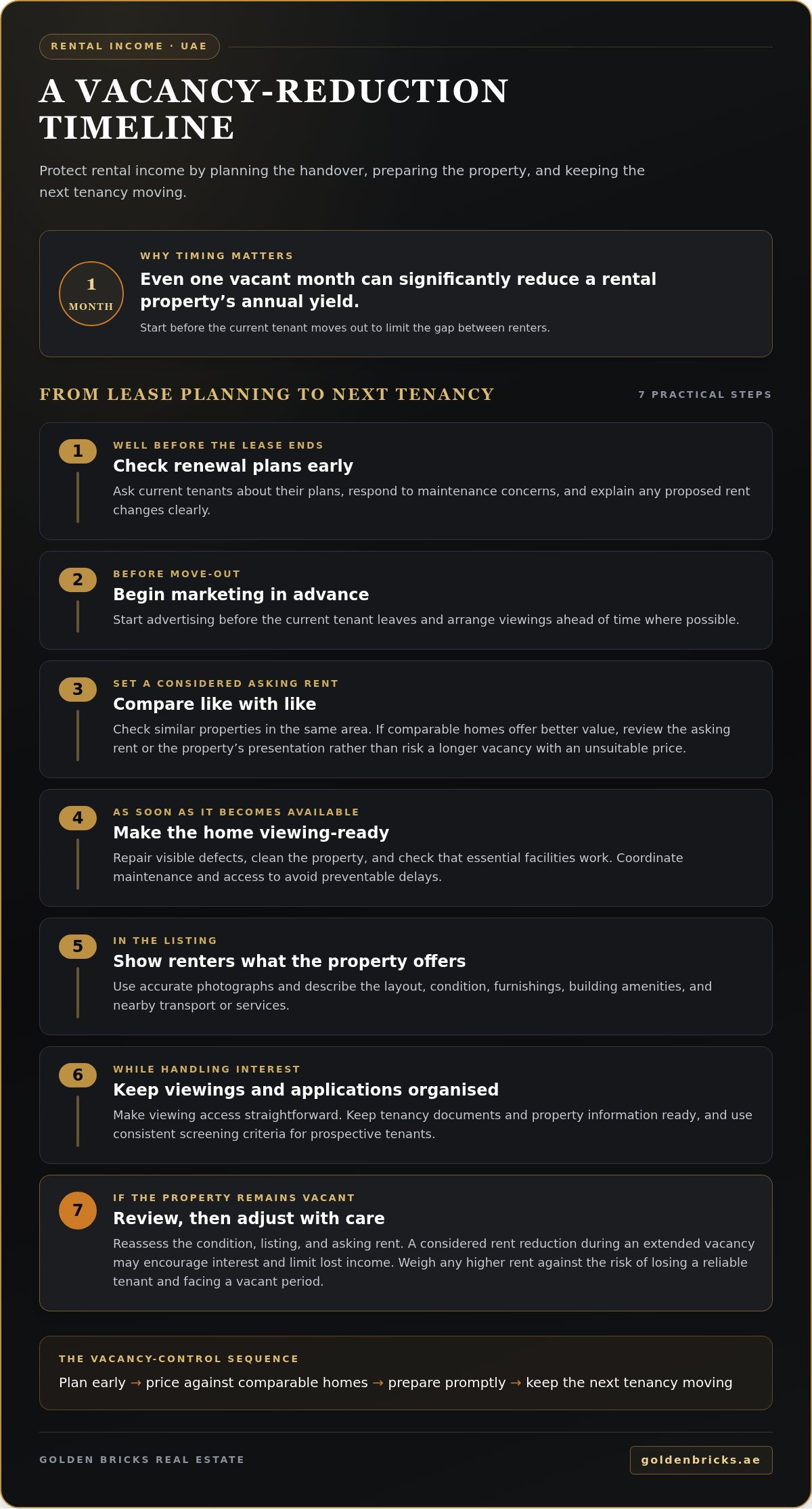
Across the UAE, even one vacant month can significantly reduce a rental property’s annual yield. Landlords can protect income by beginning marketing before the current tenant moves out. Ask about renewal plans early, arrange viewings in advance, and prepare the home for its next occupant as soon as it becomes available.
A clear listing helps prospective renters decide whether a property suits their needs. Use accurate photographs and describe the layout, condition, furnishings, building amenities, and nearby transport or services. Compare the asking rent with similar properties in the same area. If comparable homes offer better value, review the rent or presentation rather than risk a longer vacancy with an unsuitable price.
Preparation can prevent avoidable delays. Repair visible defects, clean the property, and check that essential facilities work before viewings. Coordinate maintenance and access so interested renters can view the home without unnecessary scheduling barriers. Keep tenancy documents and property information ready to support an efficient application process, and apply consistent screening criteria to prospective tenants.
Reduce vacancy, turnover, and management costs with early marketing, prompt preparation, competitive pricing, and organised tenant screening. Ask current tenants about their plans well before the lease ends, respond to maintenance concerns, and explain proposed rent changes clearly. Long-term rentals in the UAE can provide stable monthly income and lower tenant turnover. Keeping a reliable tenant may support continuity more effectively than seeking higher rent at the risk of a vacant period.
If a property remains vacant, review its condition, listing, and asking rent. A considered rent reduction during an extended vacancy may encourage interest and limit lost income. For landlords seeking support with tenant relations, rent collection, and maintenance coordination, property management support can help organise the ongoing work between tenancies.
3. Furnishing apartments and rooms
Treat furnishings as an investment in tenant appeal, not simply as decoration. Review comparable furnished and unfurnished rentals in the same community. Note what each listing includes and identify practical gaps your property could fill. A furnished apartment should feel complete, well maintained, and suited to its likely occupants.
Prioritise durable essentials: a bed and mattress, seating, dining furniture, storage, and kitchen equipment. In a studio, choose compact pieces that preserve clear circulation and usable space. In a larger apartment, furnish each room for its purpose rather than leaving awkward, undefined areas. Repair wear and tear before adding new items: damaged flooring or loose fittings can undermine the perceived value of quality furnishings.
Keep the inventory proportionate to the property. Too few essentials can make a home inconvenient, while excessive décor can limit a tenant’s ability to personalise it. Choose neutral, cohesive pieces that photograph clearly and are easy to maintain between tenancies. Record included items and their condition in the tenancy documentation, supported by an inventory and clear photographs.
Before raising the rent, compare the expected furnished rental income with the cost of purchasing, replacing, cleaning, and maintaining each item. Higher rent is worthwhile only if the additional income covers these ongoing expenses and any vacancy risk. Review local listings after furnishing, then set the asking rent to reflect the property’s condition, location, and included features.
Make the furnishing offer specific in the listing. State which rooms are furnished, identify major appliances, and show each space accurately in photographs. Don’t describe a property as fully furnished if essential rooms are empty. For room rentals, clarify which facilities are private and which are shared. These details help attract tenants whose expectations match the home, reduce unsuitable enquiries, and make the listing more competitive.
4. Gross versus net rental income
Gross rent is the income a property earns before operating expenses. Net rental income is what remains after costs such as loan payments, maintenance, taxes, insurance, and utilities. For a UAE investment, comparing both figures shows whether attractive rent still delivers a strong return after ownership costs.
Calculate annual net yield by subtracting annual expenses from annual rental income, dividing the result by the property’s purchase price, and multiplying by 100. Gross yield uses annual rent before expenses in the same calculation. Keep the measures distinct: gross yield indicates rental income relative to purchase price, while net yield accounts for costs that reduce the owner’s income.
Record the rent received over the year, then deduct relevant expenses. Service charges, maintenance, and utilities reduce net income when the owner pays them. Repairs to an air-conditioning unit or replacement appliances add to maintenance costs; utilities included in the rent can also affect the amount retained. Track expenses by category to see which costs have the greatest effect.
Vacancy matters, too. A month without rent reduces annual income collected, even if the advertised rent stays the same. Compare actual rent received with the amount expected for a fully occupied year, then calculate yield using the income actually collected. This gives a clearer picture than relying on asking rents or gross income alone.
Use the calculation to assess whether a rent increase, furnishing expense, or property improvement strengthens net performance. Higher rent may not improve the result if service charges, maintenance, or vacancy also rise. Tenant demand, property condition, retention, and the cost of maintaining appliances all affect the balance. Review the figures regularly and keep receipts, invoices, and rent records for each property.
For structured oversight of rental income and property expenses, explore property management services to support the ongoing financial and operational management of your UAE property.
Golden Bricks Real Estate: Exclusive Off-Plan Projects
Golden Bricks Real Estate helps investors consider property options alongside their rental objectives. Its Exclusive Off-Plan Projects and Exclusive Ready Properties offer different acquisition routes for buyers assessing a UAE investment. Project Curation supports a considered review of opportunities, while Property Management provides ongoing oversight for rental property owners.
Consider these services when weighing a purchase, reviewing how a property fits your investment plans, or seeking ongoing management support. Rental performance still depends on factors such as tenant demand, vacancy, rent, and operating expenses. Assessing these together can help you make a more disciplined ownership decision.
Discuss your property objectives with Golden Bricks Real Estate at goldenbricks.ae.
Set a Clear Direction for Your Property
Turn your rental objectives into a decision framework. Define the tenant profile you want to serve, the level of ongoing involvement you can manage, and the net return that supports your investment plans. This clarity can guide decisions about holding, acquiring, or professionally managing a property.
If you’re assessing how to increase rental income from my property, consider how the asset fits your wider portfolio before making changes. Golden Bricks Real Estate offers Exclusive Off-Plan Projects, Exclusive Ready Properties, and Property Management to support different property objectives. Discuss your priorities with Golden Bricks Real Estate to identify a relevant next step.
Contact Golden Bricks Real Estate to discuss your property objectives. A considered plan can help you move forward with greater confidence.
Frequently Asked Questions
What Does Rental Yield Mean?
Rental yield expresses rental return as a proportion of a property’s value or purchase price. Gross yield uses rental income before expenses, while net yield accounts for operating costs. Compare properties using the same calculation and period, and separate recurring costs from one-off purchase expenses. This shows whether higher advertised rent translates into a stronger investment return after costs.
What Is Rental Income?
Rental income is money received from leasing a property to tenants. Distinguish rent due under the agreement from rent actually collected, since missed or delayed payments affect cash flow. Record payments by property and tenancy period, and track any other property-related income separately. This provides a clearer picture of the rent supporting your investment.
Are rental properties a good way to make money?
Rental properties can generate income and contribute to long-term wealth, but profitability depends on more than rent. Consider purchase value, operating expenses, financing, tenant demand, and periods without rent. A property with high advertised rent may deliver a weaker result if costs are high or payments are inconsistent. Assess expected net income alongside your investment horizon and tolerance for ongoing management.
Can You Add Another Bedroom or Bathroom?
Possibly, if the existing layout, services, and building constraints allow a practical conversion. Before planning work, assess whether the change preserves usable living space, privacy, ventilation, and access. Compare its likely effect on tenant demand with construction and maintenance costs. An extra room that compromises the layout may not improve appeal, while another bathroom can benefit shared households.
Does furnishing a property increase rent in Dubai?
Furnishing may support higher rent when prospective tenants value a move-in-ready home, but the result depends on location, demand, quality, and upkeep. Compare the full furnishing cost with the rental difference you can reasonably expect, including replacement and cleaning. A practical, well-maintained inventory may appeal more than costly decorative pieces tenants rarely use.
Long-Term vs Short-Term Rentals: Which Earns More?
Short-term rentals may generate higher revenue where visitor demand supports occupancy, but active management and legal compliance also affect the return. Long-term rentals generally offer steadier monthly income and lower tenant turnover. Compare income after operating costs, vacancy, and management demands rather than relying on potential revenue alone. The better fit depends on the property, its likely renters, and your preferred level of involvement.