

A property exit strategy for UAE investors begins with the legal interest being sold, the emirate where it is held and the terms recorded in the title or contract. In Abu Dhabi, expatriates can receive ownership deeds for residential units for 99 years, excluding land, and may hold residential units under a musataha arrangement for 50 years. Holders of usufruct or musataha rights for more than 10 years may dispose of the property, including by mortgage, without the landlord’s consent, unless the parties agree otherwise.
A sale is not simply a matter of setting a price and finding a buyer. The ownership structure and applicable rules shape the available route. This guide explains how UAE property laws and property-specific considerations affect an exit, compares the main sale options, and shows how location, title type and investment purpose inform decisions about timing, transferability and next steps.
Key Takeaways
- Identify the legal interest attached to the property first, as ownership structure and emirate can shape transfer rights and sale conditions.
- Compare sale routes against your investment objective, buyer profile and the terms governing the property.
- Assess title, location and other real-property considerations together to understand what may influence a transfer and its appeal to buyers.
- Weigh potential capital appreciation against rental income and holding costs when deciding whether to sell or retain the asset.
Property law
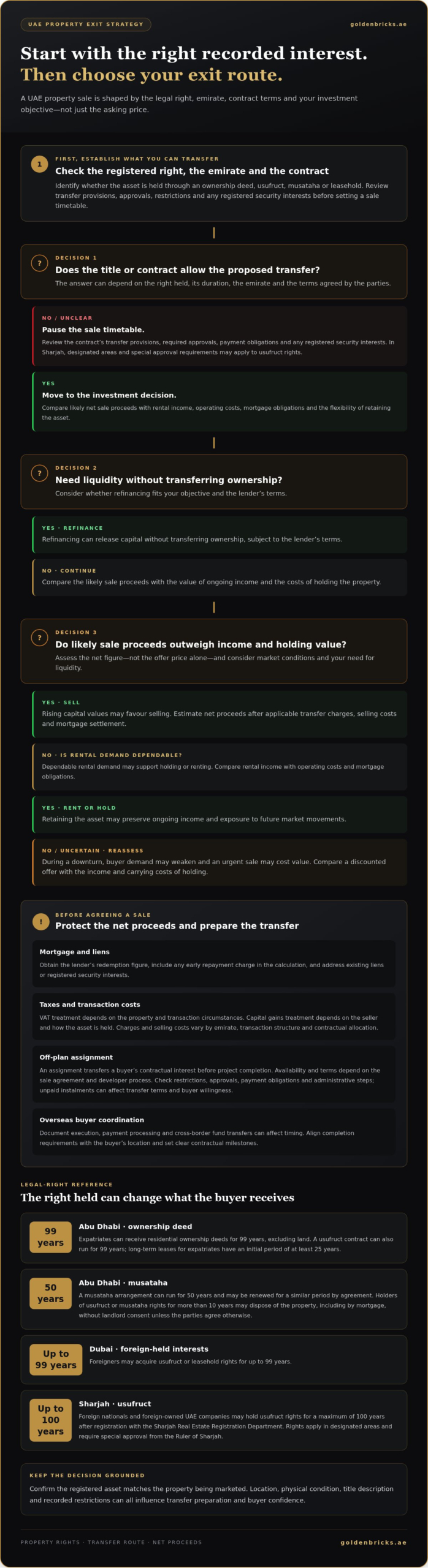
A property exit strategy for UAE investors starts with identifying the legal interest recorded for the asset. A residential ownership deed, usufruct, musataha arrangement or leasehold can carry different transfer rights. Rules vary across the UAE, so the emirate and the contract terms both matter.
In Abu Dhabi, expatriates can receive ownership deeds for residential units for 99 years, excluding land. A musataha arrangement can run for 50 years and be renewed for a similar period by agreement of the parties. A usufruct contract can run for 99 years, while long-term leases for expatriates have an initial period of at least 25 years. These distinctions affect what an investor transfers when selling.
For usufruct or musataha rights in Abu Dhabi, holders for more than 10 years may dispose of the property, including by mortgage, without the landlord’s consent, unless the parties agree otherwise. The contract therefore matters alongside the duration of the right. Review its transfer provisions before setting a sale timetable or agreeing terms with a buyer.
In Dubai, foreigners may acquire usufruct or leasehold rights for up to 99 years. In Sharjah, usufruct rights apply in areas designated by the Government of Sharjah and require special approval from the Ruler of Sharjah. Foreign nationals and foreign-owned companies in the UAE may hold Sharjah usufruct rights for a maximum of 100 years after registration with the Sharjah Real Estate Registration Department.
Abu Dhabi also permits public holding companies to own property when non-UAE nationals hold no more than 49 per cent of ownership. A landlord may not mortgage property held under usufruct or musataha without the holder’s consent, unless the parties agree otherwise. For an exit, distinguish the investor’s registered right from any underlying land interest.
How do UAE residency visas linked to property ownership change after a sale? Selling a qualifying property can affect the basis for a property-linked visa, because the visa and title are separate matters. The outcome depends on the visa category, its ownership conditions and whether another qualifying basis remains after the transfer.
Property sale
A sale decision means comparing likely proceeds with the income, flexibility and costs of retaining the asset. Contract terms, financing and emirate-specific procedures all shape the available route in the UAE.
Choosing an exit approach and timing
An exit strategy means choosing whether to sell, rent, refinance or hold an investment property. Each option balances liquidity against ongoing income and exposure to market movements. Compare expected sale proceeds with rental income, operating costs and mortgage obligations. Rising capital values may favour selling, while dependable rental demand may support holding. Refinancing can release capital without transferring ownership, subject to the lender’s terms.
Taxes, transfer fees, and selling costs
Tax and transaction costs affect net proceeds. VAT treatment depends on the property and transaction circumstances; capital gains treatment depends on the seller and how the asset is held. Transfer charges and other selling costs also vary by emirate, transaction structure and contractual allocation. Estimate net proceeds after applicable charges instead of comparing offer prices alone.
Mortgage settlement can affect the sale timeline. Obtain the lender’s redemption figure and include any early repayment charge in your net-proceeds calculation. Address existing liens or registered security interests as part of completing the transfer.
Off-plan sales and property assignments
An off-plan assignment transfers a buyer’s contractual interest before project completion. Whether it is available, and on what terms, depends on the sale agreement and the developer’s assignment process. Before negotiating with an assignee, review the agreement for transfer restrictions, required approvals, payment obligations and administrative steps. For example, unpaid instalments can affect both the transfer terms and a prospective buyer’s willingness to proceed.
Downturn and overseas-buyer risks
A downturn can reduce buyer demand and weaken your negotiating position, making an urgent sale more costly in forgone value. Before accepting a discounted offer, compare it with the income and carrying costs of holding the property. Overseas buyers can add timing and coordination challenges, including document execution, payment processing and cross-border fund transfers. Set clear contractual milestones and align completion requirements with the buyer’s location.
For a decision grounded in current UAE conditions, review UAE property market intelligence alongside the asset’s income and sale terms.
Real property
Real property due diligence examines the asset’s registered rights and physical characteristics before a sale. For an exit, compare the title description with the unit, plot or other interest being marketed. Confirm that the property being transferred matches the registered asset, and identify any restrictions recorded against it. A mismatch can affect buyer confidence, negotiations and transaction preparation.
Location also shapes which rights can be acquired and transferred. An April 2019 amendment to Abu Dhabi’s real estate law gave non-UAE nationals the right to acquire real estate rights in investment areas. The investment-area distinction matters: an investor should understand the property’s location and the specific right held before presenting the asset to prospective buyers.
Sharjah has a distinct framework for usufruct interests. Foreign nationals and foreign-owned companies in the UAE may hold usufruct rights for a maximum of 100 years after registration with the Sharjah Real Estate Registration Department. For an exit, registration is a material part of the rights record. The seller’s documents should clearly reflect the interest being offered to a buyer.
A property’s physical condition can influence its marketability independently of its legal title. Documented maintenance, clear access and consistent descriptions across sale materials give residential buyers a clearer basis for assessment. For commercial premises, consider permitted use alongside the actual configuration. These details help present the asset accurately, rather than relying only on location or headline valuation.
Before marketing, assemble the title or rights documents, relevant plans and property records. Compare them with the asset’s current condition and identify any discrepancies to resolve. For example, a difference between a unit’s physical layout and its documented description can prompt buyer questions or delay negotiations. This review helps you define exactly what is being sold and describe the property accurately.
How do UAE property capital gains and rental yields affect the best exit timing?
Capital gain is the difference between an asset’s sale proceeds and its acquisition cost, adjusted for relevant transaction expenses. Rental yield measures income against the property’s value or purchase cost. Comparing both helps investors judge whether selling now or retaining the asset better serves their portfolio objectives.
Start with the numbers for the specific property, not broad market assumptions. Estimate net sale proceeds after mortgage settlement and selling costs, then compare them with the original investment. For rental income, deduct operating expenses and periods without a tenant before assessing net yield. A Dubai apartment and an Abu Dhabi villa may have different income profiles, even when their headline values appear similar.
Capital appreciation alone does not determine when to exit. A higher potential sale price may be less attractive if transaction costs absorb much of the gain. Conversely, stable net rental income may support continued ownership when the yield aligns with your objectives. Compare expected sale proceeds with the income and costs of holding.
Consider a property with attractive rent but rising maintenance needs. Reassess net income after those expenses instead of relying on gross rent. If income weakens and a suitable sale offer is available, selling may be worth considering. If the asset continues to generate income that fits your plans, holding can remain a rational choice.
Use a consistent comparison: current sale value, net rental income, foreseeable expenses and the investor’s need for liquidity. This frames timing as a portfolio decision, rather than a reaction to one market signal. Review the figures when tenancy terms, property condition or financing obligations change. A property management plan can help investors monitor rental performance and operating costs; discuss property management for your investment.
Golden Bricks Real Estate: Exclusive Off-Plan Projects
Golden Bricks Real Estate helps investors consider their next UAE property position through Exclusive Off-Plan Projects and Exclusive Ready Properties. Once you have assessed whether to sell, retain or reallocate capital, compare these options with your investment horizon, income objectives and appetite for an asset under development.
Project Curation supports a considered review of opportunities, while Property Management serves owners focused on operating and retaining an asset. These services can support different stages of the property lifecycle, from evaluating an acquisition to overseeing an investment held for rental income.
For a discussion about property options aligned with your investment objectives, contact Golden Bricks Real Estate or visit goldenbricks.ae.
Make Your Next Property Decision Deliberate
A durable property exit strategy for UAE investors should reflect the wider portfolio, not just one asset’s performance. Before a future transaction, define what would prompt a change in direction: a shift in income priorities, a need to rebalance holdings or a new investment objective. These decision points help you act with purpose rather than react to market noise.
Keep your framework current as your circumstances and portfolio evolve. A review can clarify whether your next move is to release capital, retain an income-producing asset or consider another property opportunity. The aim is to make the decision in light of your objectives and the asset’s role in meeting them.
For a considered discussion about your next property decision, contact Golden Bricks Real Estate. A clear investment direction can help you move forward with confidence.
Frequently Asked Questions
What are the main property exit strategies for UAE real estate investors?
The main routes are selling, renting, holding, refinancing or assigning an eligible off-plan contract. A property exit strategy for UAE investors works best when each route is assessed against the portfolio’s purpose. An investor seeking liquidity may prioritize a sale, while an owner focused on recurring income may retain a tenanted asset. Reassess your approach when financing, occupancy or investment priorities change.
What are the steps and documents required to sell a property in Dubai or Abu Dhabi?
Confirm who holds title and who has signing authority, then organize the title deed, seller identification, property details and sale documents. If a lender has security over the asset, include settlement information. For an entity-owned property, prepare records showing signing authority. The parties then coordinate payment arrangements and the relevant emirate’s registration process. Required paperwork depends on ownership structure, financing and transaction terms.
How long does it typically take to sell UAE property and receive sale proceeds?
Timing depends on buyer readiness, document preparation, mortgage settlement, agreed conditions and transfer scheduling. Proceeds are released according to the transaction’s payment and transfer arrangements. A buyer paying without financing has fewer loan-related steps than one arranging a mortgage, while title or signing-authority issues can delay completion. Map the milestones from accepted offer to cleared funds to establish a practical schedule.