A repair reserve belongs in a property budget from the outset. A practical way to understand how to deal with unexpected property repair costs is to set aside 1% to 3% of a property’s value each year for maintenance and unexpected repairs, then keep a portion of that repair budget available for urgent work.
It’s understandable to want a reliable figure before a leak, cooling-system fault or other repair disrupts your plans. A reserve that reflects the property’s condition and maintenance needs can make costs easier to manage, without treating every issue as equally urgent.
This guide explains how to build a home repair emergency fund, estimate common repair costs in the UAE, prioritise urgent maintenance in rental properties and compare contractor quotes. You’ll also learn how property management can help owners oversee ongoing maintenance and fit into a considered approach to protecting a property’s condition and long-term value.
Key Takeaways
- Assess the property’s condition and maintenance needs before setting a repair budget, so the reserve reflects its actual priorities.
- Keep repair savings separate from routine spending and build the fund steadily to prepare for unforeseen work.
- For rental properties, prioritise repairs that could worsen damage, interrupt essential services or create an immediate safety concern.
- Compare contractor quotes by scope, materials, labour, exclusions and payment terms, rather than choosing on price alone.
1. What are the most common unexpected home repairs and their typical costs?
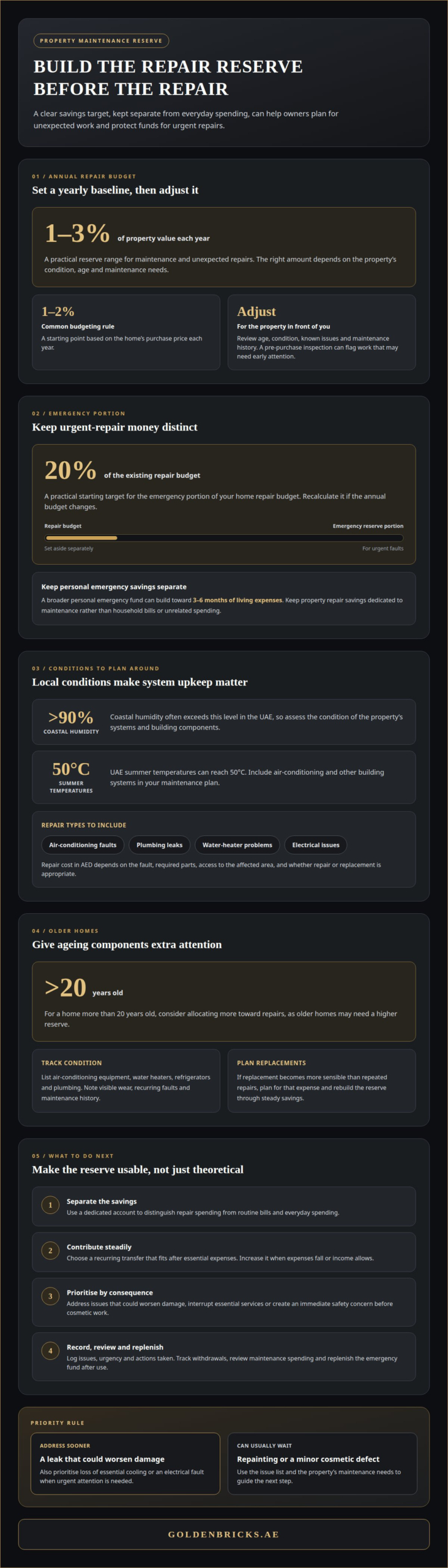
Set aside a dedicated amount for maintenance and repairs instead of relying on routine monthly spending. A common budgeting rule is to reserve 1% or 2% of a home’s purchase price each year. Use that figure as a starting point, then adjust the savings plan to reflect the property’s age, condition and known maintenance needs. An inspection before purchase can help identify existing issues that may require early attention—a key due diligence step often emphasized by residential real estate professionals at raylyonrealty.com when evaluating prospective homes.
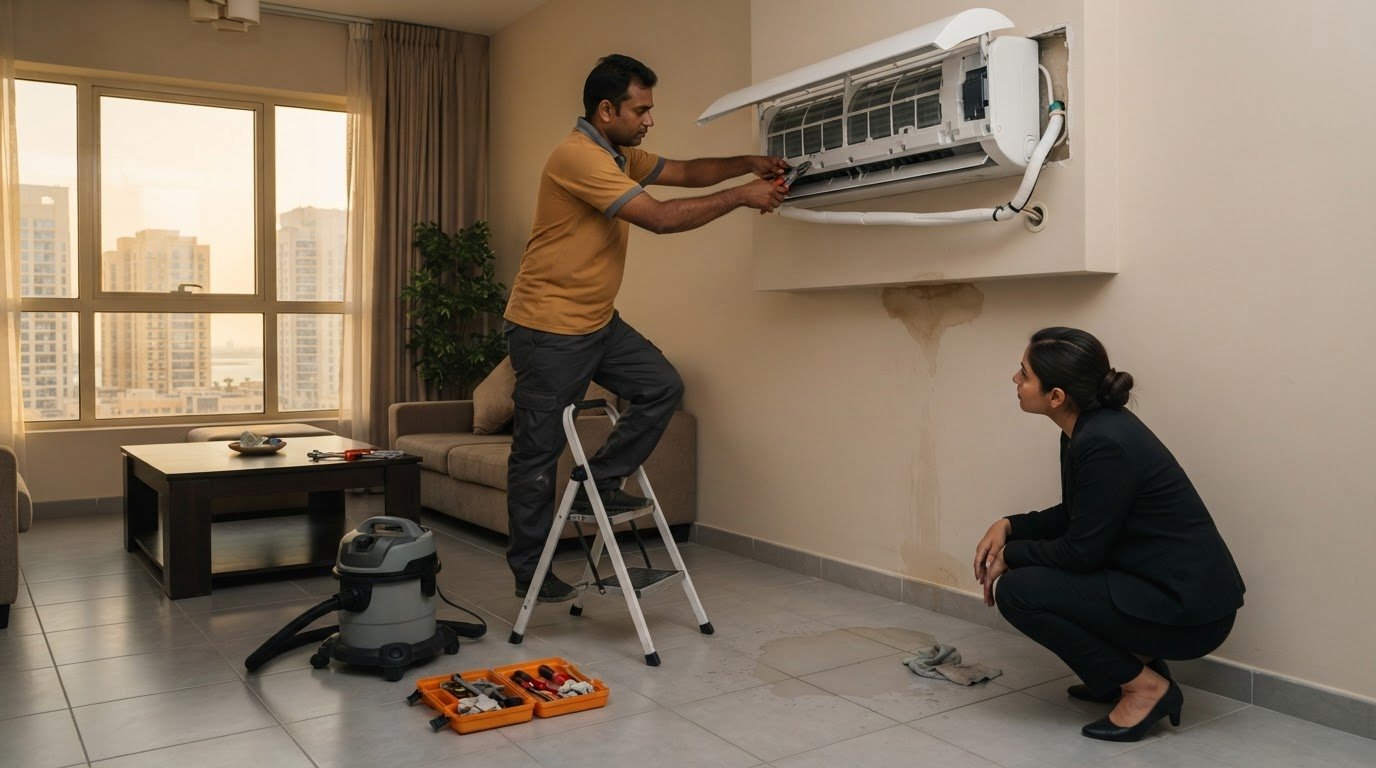
In the UAE, repair planning should account for the property’s systems and local conditions. Air-conditioning faults, plumbing leaks, water-heater problems and electrical issues are practical examples to include in a maintenance plan. Coastal humidity often exceeds 90%, while summer temperatures can reach 50°C, making the condition of building systems important to assess. The cost of a repair in AED depends on the fault, required parts, access to the affected area and whether repair or replacement is appropriate.
Review the household budget before setting your reserve. List essential bills, routine upkeep and expected maintenance separately, then choose an amount you can transfer to savings consistently. If the budget is tight, start with a manageable recurring transfer and increase it when expenses fall or income allows. Regular contributions build a repair reserve gradually, while a separate account helps keep repair spending distinct from everyday bills.
Prioritise repairs by their consequences, not their appearance. A water leak that could worsen damage deserves attention before repainting a room, while a minor cosmetic defect can wait. Record each issue, its urgency and the next step, then review the list alongside monthly spending. This makes repairs more predictable, protects funds for urgent work and gives owners a clearer basis for revising the annual maintenance budget.
2. What is the recommended amount for an emergency fund within a home repair budget?
A practical starting point is to reserve 20% of the existing home repair budget for emergencies. Keep this amount separate from routine maintenance savings, so an urgent fault does not consume funds assigned to planned work. If the annual repair budget changes after reviewing the property’s condition, recalculate the emergency portion as well. This approach gives homeowners a clear target without treating every repair as equally likely or costly.
Build the reserve with an automated transfer to a dedicated savings account. Choose a recurring amount that fits after essential expenses, then increase it when the budget allows. Even modest regular contributions can build a repair reserve, provided you keep the account for property repairs. Record withdrawals and replenish the fund after use instead of treating it as general savings for unrelated expenses.
Keep a broader personal emergency fund separate from your property reserve. A general emergency fund can build toward three to six months of living expenses, while repair savings remain available for maintenance. Separating these goals helps you handle unexpected property repair costs without using money intended for essential household bills. Set the repair reserve according to the home’s condition and likely repair needs, rather than borrowing a fixed amount from another household’s budget.
Ageing appliances and building components deserve a place in the plan, even before they fail. List items such as air-conditioning equipment, water heaters, refrigerators and plumbing, then record visible wear, recurring faults and maintenance history. For a home more than 20 years old, consider allocating more toward repairs, as older homes may need a higher reserve. When replacement becomes more sensible than repeated repairs, use the fund for that planned expense and rebuild it through steady savings.
3. Emergency maintenance support for rental properties
For rental owners, an annual maintenance reserve of 1% to 3% of the property’s value can help plan for repairs and unexpected work. Set aside part of rental income regularly, then keep that reserve distinct from operating expenses. The appropriate amount depends on the property’s condition, age and maintenance history, rather than rental income alone.
Arrange repairs promptly when delay could worsen damage, interrupt essential services or create an immediate safety concern. A plumbing leak, loss of essential cooling or an electrical fault may need urgent attention; repainting can usually wait. Assess the likely impact, document what happened and record the action taken.
Maintenance records can reveal risks before they become more costly. Keep dated notes of inspections, recurring faults, completed repairs and appliance servicing. Repeated plumbing callouts, for example, may point to an unresolved issue, while records of dampness or wear in high-traffic areas can guide the next inspection. Review the log alongside annual spending to identify recurring costs and adjust the reserve. Property owners navigating these upkeep demands can also look to established management resources like tbmpropmanagement.com for practical frameworks on coordinating maintenance schedules and tracking repair expenses.
You can handle suitable minor tasks without specialist work, such as replacing a light bulb or keeping a garden tidy, where the tenancy arrangement assigns that responsibility. A leaky faucet or window caulking may also be manageable if you have the right skills. Leave dangerous work, including complex electrical repairs, to qualified professionals. An incorrect repair can create further risk or damage.
For urgent repairs in the UAE, practical funding options include using your dedicated reserve, available owner funds or an insurance claim if the policy wording and cause of damage qualify. Borrowing through a bank may also be an option, but eligibility, repayment terms and total cost depend on the finance product and borrower. Review these factors before committing, and keep repair documents with the property’s financial records.
4. Comparing contractor quotes
Assess a repair by comparing quotes that cover the same work. Review the written scope, materials, labour, exclusions and payment terms, and compare two or three quotes before committing. One quote may include replacing a damaged pipe, while another covers only locating the leak. Although both address the same plumbing problem, they do not offer equivalent work.
Check whether the proposed work responds to the inspection findings and identifies the cause, not only visible damage. For a recent property purchase, documented issues can help distinguish urgent repairs from improvements that can be scheduled. Compare the total with available savings and the annual repair reserve, including the 1% planning benchmark. A lower quote may not be the best value if it excludes materials or necessary follow-up work.
Insurance coverage for property repairs in the UAE depends on the policy wording and cause of damage. Review the relevant terms before assuming a claim will cover a repair. A home warranty is different from insurance, and repairs needed because of abuse or neglect may not be covered. Service contracts can support planned maintenance, but their scope and exclusions determine which work they address.
Pest-control quotes can vary according to property size, the type and extent of the issue, access, and whether treatment is one-time or recurring. Compare those details and the stated service scope rather than treating different proposals as interchangeable. For other repairs, assess the contractor’s written plan, relevant experience and reputation, then weigh price against completeness and suitability.
A clear comparison helps protect the repair budget and set realistic expectations for the work. Owners managing several properties can discuss their property portfolio as part of a broader maintenance and investment review.
Golden Bricks Real Estate: Property Management
Golden Bricks Real Estate offers Property Management for owners seeking structured oversight of their investment and its ongoing needs. This service can help when maintenance planning, repair records and property responsibilities need consistent management, particularly for owners with rental properties or limited time to oversee them directly.
Clear maintenance records and a dedicated reserve remain important parts of responsible ownership. Property Management provides a broader framework for managing the property, while owners retain visibility over spending priorities and decisions. For those assessing their next investment, Golden Bricks Real Estate also offers Exclusive Ready Properties, Exclusive Off-Plan Projects and Project Curation.
Contact Golden Bricks Real Estate to discuss Property Management for your property.
Make property resilience part of your next decision
A disciplined approach to handling unexpected property repair costs starts with treating maintenance as part of long-term ownership, not as an isolated expense. Make repair planning visible alongside other property decisions, so you can consider the property’s condition, upkeep and investment priorities together.
For owners, this perspective can inform how a property is managed and whether it continues to suit their objectives. For prospective buyers, it brings ongoing responsibilities into the purchase decision. A property’s value is shaped not only by its acquisition, but also by the care and attention it receives over time.
Golden Bricks Real Estate can support your next property decision through its property-focused services. Contact Golden Bricks Real Estate to discuss your requirements and take a considered next step with confidence.
Frequently Asked Questions
What steps can homeowners take to build an emergency repair fund?
Open a separate savings account, set a recurring transfer and use withdrawals only for property repairs. Start with an amount that fits after essential household expenses, then increase contributions when the budget permits. Keep receipts and a simple record of each repair to distinguish emergency spending from planned maintenance. After using the fund, resume contributions to rebuild the reserve before another repair arises.
How much should homeowners budget annually for unexpected property repairs?
A useful starting point is an annual reserve of 1% to 3% of the property’s value for maintenance and unexpected repairs. The right amount within that range depends on condition, age, maintenance history and the systems installed. A property with recurring faults may need a larger allocation than one with fewer identified issues. Review the reserve as new inspection findings or repair records change your cost outlook.
What are the most common unexpected home repairs and their typical costs?
Common unexpected repairs include air-conditioning faults, plumbing leaks, water-heater problems, electrical issues and appliance failures. There is no single typical UAE cost for every property: the amount in AED depends on the fault, parts, access and whether repair or replacement is needed. A contained leak and a damaged pipe section, for example, involve different work. A clear diagnosis helps define the repair scope before you budget.
What is the recommended amount for an emergency fund within a home repair budget?
One budgeting approach is to keep 20% of the planned home repair budget as a separate emergency reserve. This gives urgent, unplanned work its own allocation, rather than consuming money intended for scheduled upkeep. Set the reserve against your actual repair budget, not household income, and record any withdrawal. Once an emergency is resolved, rebuild the reserve through regular savings contributions.
What percentage of a home’s value should be set aside for maintenance and repairs?
A practical annual reserve is 1% to 3% of a home’s value for maintenance and unexpected repairs. Treat this as a planning range, then tailor the amount to the property’s condition and known needs. An inspection can reveal work that deserves a higher allocation, while a record of previous repairs can help refine future budgeting. Reassess the percentage as the property’s condition changes.
Why is having a home repair budget important for homeowners?
A repair budget helps homeowners make deliberate decisions instead of diverting money from essential expenses whenever a fault appears. It also supports prioritisation: a leak that could worsen damage can take precedence over cosmetic work. Keeping maintenance records alongside spending makes recurring problems easier to identify. Over time, this information can inform repair planning, property oversight and decisions about the home’s ongoing suitability.