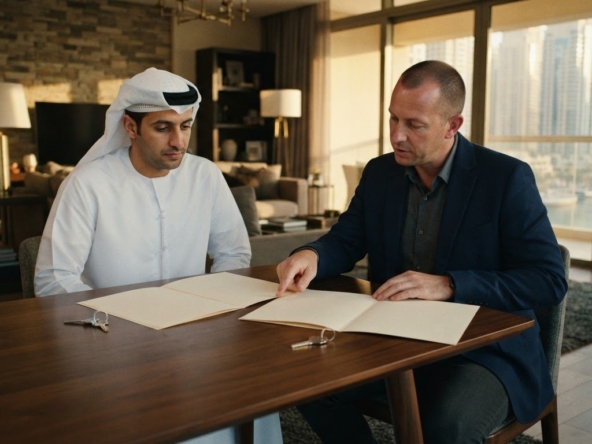

A 5–10% opening offer below the asking price is common for a realistically priced Dubai property, but the headline figure is only one part of the negotiation. Understanding how to negotiate property prices with developers also means considering off-plan incentives, payment schedules, upgrades and other terms that affect the deal’s overall value. The strongest proposal is grounded in the property’s market position and the buyer’s priorities.
It’s reasonable to expect room to negotiate, but a lower price isn’t always the most valuable concession. Developers may be more open to including upgrades or adjusting payment terms than reducing the asking price. The best approach depends on the project and the full terms of the offer.
This guide explains what buyers can negotiate, when their position may be strongest and how to assess a counter-offer. It also covers incentives and payment plans for off-plan purchases, helping you focus on terms that support your acquisition goals.
Key Takeaways
- Set a considered opening offer and plan how to respond if a developer counters or presents a best-and-final position.
- Use recent comparable sales and the project’s available inventory to identify when your negotiating position may be strongest.
- Assess the value of a proposed discount against the full purchase terms, not just the advertised price.
- For off-plan purchases, weigh incentives, upgrades and payment-plan flexibility; property management can support ownership beyond the transaction.
1. Managing counter-offers and best-and-final offers
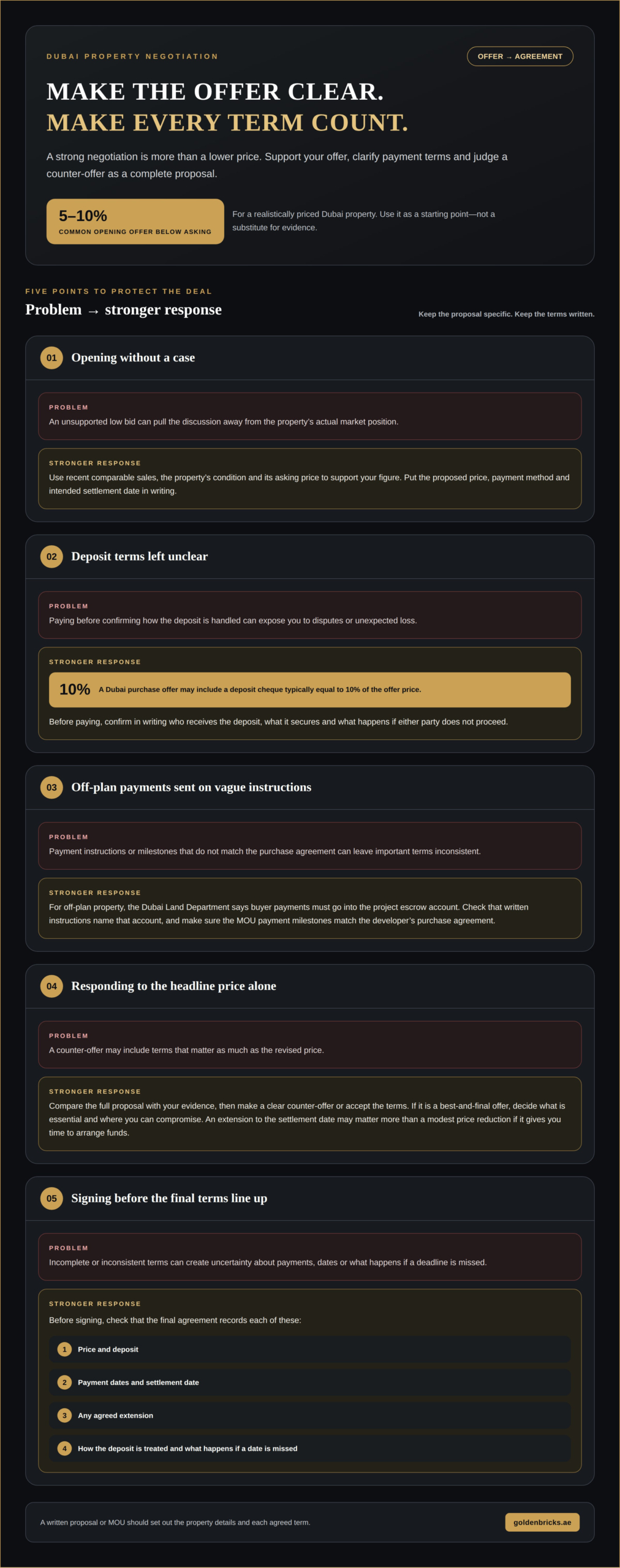
Start with a written offer supported by comparable sales, the property’s condition and the asking price. For a realistically priced Dubai property, a common opening offer is 5–10% below asking. This gives buyers room for negotiation without making an unsupported low bid the centre of the discussion. State the proposed price, payment method and intended settlement date clearly.
Present the offer through a written proposal or memorandum of understanding (MOU), setting out the property details and each agreed term. A Dubai purchase offer may include a deposit cheque typically equal to 10% of the offer price. Before paying, confirm in writing who receives the deposit, what it secures, and what happens if either party does not proceed. Ambiguity over these terms can expose buyers to disputes or unexpected loss.
For an off-plan purchase, confirm where payments must go. According to the Dubai Land Department, payments received from buyers of off-plan properties must be paid into the project escrow account. Before transferring funds or handing over a cheque, check that the written instructions name that account. Make sure the MOU’s payment milestones also match the developer’s purchase agreement.
When the developer counters, assess the whole proposal rather than reacting to the price alone. Compare the revised figure with your evidence, then make a clear counter-offer or accept the terms. If the developer makes a best-and-final offer, decide which terms are essential and where you can compromise. For example, an extension to the settlement date may matter more than a modest price reduction if it gives you time to arrange funds.
Before signing, check that the final agreement records the price, deposit, payment dates, settlement date and any agreed extension. Understand how the deposit will be treated and what happens if a date is missed. These checks help prevent payments being made under incomplete or inconsistent terms.
2. When Is Your Bargaining Position Strongest?
Your negotiating position may be stronger when demand is softer, a developer has unsold inventory or a home has been listed for six months. Negotiations may also be more flexible near a developer’s quarter-end or year-end sales period. Treat these as signals to investigate, not proof that a property is overpriced. Ask what flexibility is available and support your offer with evidence.
For completed homes, compare sales for similar properties recorded in Dubai Land Department records over the previous 3–6 months. Match location, property type, size, condition and finishes as closely as possible. A larger home or upgraded interior is not a like-for-like comparison. Use the closest examples to assess whether the asking price aligns with recent transactions, then explain any material differences before discussing your offer.
Ask the developer which comparable properties support the asking price and what specifications or finishes are included. Confirm that the quoted terms apply to the specific unit, and ask whether payment or settlement dates can be adjusted. Clear answers help you distinguish a reasonable price from a headline figure that leaves out important terms.
Compare current quotes from other builders only when the properties are genuinely alike. Check the unit type, location, materials, finishes and payment conditions, since a lower quote may reflect a different specification. Note each difference during due diligence and use the comparison to discuss price or terms. Interest rates and competition among buyers can also affect a developer’s room to negotiate.
Demonstrate serious intent with proof of funds or a financing pre-approval, and be ready to explain your preferred timeline. Surveying a property more than twice can signal sustained interest, while a clear decision process helps keep discussions focused. Buyers comparing completed-home options can also review Dubai ready properties as part of their market assessment.
3. Discounts from the asking price
A practical negotiating aim for a Dubai property may be around 7–8% below asking, provided comparable sales support the request. A well-prepared buyer may secure a 5–10% discount, while an offer 15–20% or more below asking can be viewed as a lowball on a reasonably priced property. These ranges are guides, not fixed entitlements. The property’s price, demand and the strength of your evidence all shape the discussion.
Build the case around valuation, not a percentage chosen in isolation. If comparable sales indicate the asking price is high, explain the gap and identify the transactions that support your assessment. If the property is already reasonably priced, a smaller adjustment may be more credible than a steep reduction. A serious buyer makes a specific proposal and explains how it reflects the home’s location, condition and features.
Consider the total acquisition cost as well as the agreed price. Dubai Land Department’s transfer fee is 4% of the property price, so a lower price also reduces that fee. A discount should therefore be assessed against the full purchase budget, not treated as an isolated saving.
If you need a mortgage, consider how the proposed price compares with the lender’s valuation and your available funds. A lower agreed price can affect the amount financed, while a lower-than-expected valuation may mean reassessing your cash contribution. Set your preferred price and maximum before making a counter-offer. This keeps the discussion grounded in affordability and evidence, not pressure to accept a headline discount.
Consider whether the developer will reduce the price or offer value through other terms. Compare the revised figure with your valuation and the property’s full costs, and record any accepted reduction in the written agreement.
4. Negotiating off-plan incentives and payment plans
For an off-plan purchase, assess the entire transaction rather than focusing only on a price reduction. A sound approach to how to negotiate property prices with developers starts by identifying the terms that matter most to your ownership plan. At a new phase launch, ask about early-buyer pricing and concessions. If the developer won’t reduce the headline price, propose an alternative benefit with practical value.
Payment flexibility can ease the initial cash burden. Ask whether down-payment instalments can be split or extended, and compare post-handover schedules by timing and conditions. Consider how each plan fits your expected cash flow rather than choosing based only on the first payment. Put any revised instalment dates and amounts in the written agreement.
Service-charge relief can affect the cost of holding an off-plan home. Dubai developers may offer waivers for the first 2–5 years, so weigh the concession against your ownership horizon and expected ongoing costs.
For each incentive, clarify what it includes, when it applies and whether conditions are attached. For example, a furnishing package should list the items covered in the signed document. This gives both parties a clear record and helps you compare its practical value with a direct price reduction.
In Dubai or Abu Dhabi, decide whether your priority is a lower purchase price, reduced upfront cash pressure or improved ownership terms. When considering how to negotiate property prices with developers, rank those outcomes before making a counterproposal. Record every accepted concession in the PPJB or another officially signed document before paying a down payment, as the written terms govern the agreed transaction.
For support with ownership beyond the purchase, explore property management as part of your longer-term property planning.
Golden Bricks Real Estate: Property Management
Golden Bricks Real Estate offers property management for owners whose priorities extend beyond agreeing on a purchase price. This service is relevant when you want to plan for ownership alongside the acquisition or assess how a completed purchase fits your wider portfolio.
If you’re still evaluating opportunities, Golden Bricks Real Estate offers exclusive off-plan projects, exclusive ready properties and project curation. These services support different stages of property selection, from considering a development before completion to reviewing ready homes. The right route depends on your acquisition goals and the type of property you’re considering.
Negotiation sets the terms of entry, while ownership planning continues beyond the transaction. Contact Golden Bricks Real Estate to discuss your property requirements.
Make Your Next Property Decision With Clarity
A negotiated purchase should support your wider ownership strategy, not simply settle a discussion over price. Before committing, consider how the property fits your intended use, investment horizon and appetite for ongoing management. This perspective gives your next decision a clear purpose, whether you’re assessing a development opportunity or a ready home.
Understanding how to negotiate property prices with developers is one part of a disciplined acquisition. Golden Bricks Real Estate offers exclusive off-plan projects, exclusive ready properties and property management, connecting property selection with ownership needs. These services can help you consider what comes after the transaction, too.
If you are ready to discuss a property requirement or your next acquisition, contact Golden Bricks Real Estate. A considered next step can keep your property decisions aligned with your broader objectives.
Frequently Asked Questions
What Can Actually Be Negotiated?
You can negotiate more than the purchase price. The discussion may cover payment timing, upgrades, service-charge relief, warranties and contract terms. Ask for a detailed cost breakdown to identify charges that affect the transaction’s overall value. For a new home, an extension or enhancement of warranties covering systems and appliances may also be negotiable. Record each accepted term in the signed agreement.
When Is Your Bargaining Position Strongest?
Your position may be stronger when demand is subdued, the developer has unsold homes or comparable current offers support your case. Showing that you’re ready to proceed can also make your proposal more credible. Compare properties with equivalent specifications, materials and finishes, then use those details to explain your offer. A price comparison carries less weight when the homes differ materially.
How much can you negotiate off a property price with a developer in the UAE?
For a well-prepared buyer, a 5–10% discount from asking is a possible negotiation range, not a guaranteed outcome. The appropriate target depends on whether the property is competitively priced, its specifications and current demand. An offer 15–20% or more below asking may be considered a lowball on a reasonably priced Dubai property. Support your proposed figure with comparable evidence.
What incentives can buyers negotiate besides a lower property price?
You can discuss payment-plan flexibility, upgrades, furnishings, service-charge waivers and enhanced warranties. For example, a warranty extension for a home’s systems or appliances may add value without changing the headline price. Assess each concession against your planned ownership costs and intended use. Before paying a down payment, ensure the agreed incentive appears in the PPJB or another officially signed document.
How to compare developer offers and prices for similar UAE properties?
Compare the complete terms, not just the listed price. Match properties by location, type, size, materials, finishes and included upgrades, then assess payment timing, fees and concessions. For completed homes, recent comparable transactions provide a useful benchmark. For off-plan offers, compare the written specifications and payment schedules, accounting for differences before deciding which proposal offers better overall value.